AI Summary
This article explains when a dental crown in Singapore is the right choice for a damaged tooth and how it differs from a filling or onlay. It’s written for anyone facing tooth decay, a crack, or a tooth after root canal treatment. Drawing on Elements Dental’s clinical experience, it breaks down the exact damage patterns dentists look for, plus materials and procedure steps. Readers should book a consultation before the tooth worsens further.
When a tooth is too damaged to hold its shape on its own, a dental crown, a cap made specifically for that tooth, restores its strength, structure and natural look.
At Elements Dental, we place dental crowns in Singapore multiple times a week, and the most common mistake we see is timing. Patients wait until a tooth is beyond repair, turning a simple two-visit restoration into root canal treatment or even extraction.
Understanding when a crown is the right call, rather than a filling or onlay, helps you protect your tooth when it needs protection most.
Key Takeaways
- A filling, onlay and crown serve different jobs; a crown is not always your dentist being thorough; it may be the tooth has crossed a structural threshold.
- The decision usually comes down to how much healthy tooth structure remains, not the size of the cavity.
- Delaying a recommended crown raises the risk of cracks, root canal treatment and tooth loss.
- With modern materials, a well-maintained crown can last 10 to 15 years and often longer.
The Damage Threshold: When Exactly Does A Tooth Need A Crown?
The short answer is when a filling can no longer protect the tooth.
Dentists in Singapore look for specific patterns rather than a fixed cavity size. A crown is indicated when a tooth shows any of these:
- More than half of the tooth structure is lost to decay, fracture or an existing filling.
- A crack runs through the tooth, whether cosmetic or structural.
- A tooth has had root canal treatment, which leaves it brittle and prone to fracture.
- A large old filling is failing at its margins, allowing bacteria to leak underneath.
- A tooth is worn down or cracked from grinding (bruxism).
A filling repairs a dent in a cup, an onlay repairs the cracked rim, but a crown replaces the rim entirely to hold the cup together.
It distributes biting force across the whole tooth instead of letting stress concentrate on one weak point.
Filling Versus Onlay Versus Crown: The Decision Matrix
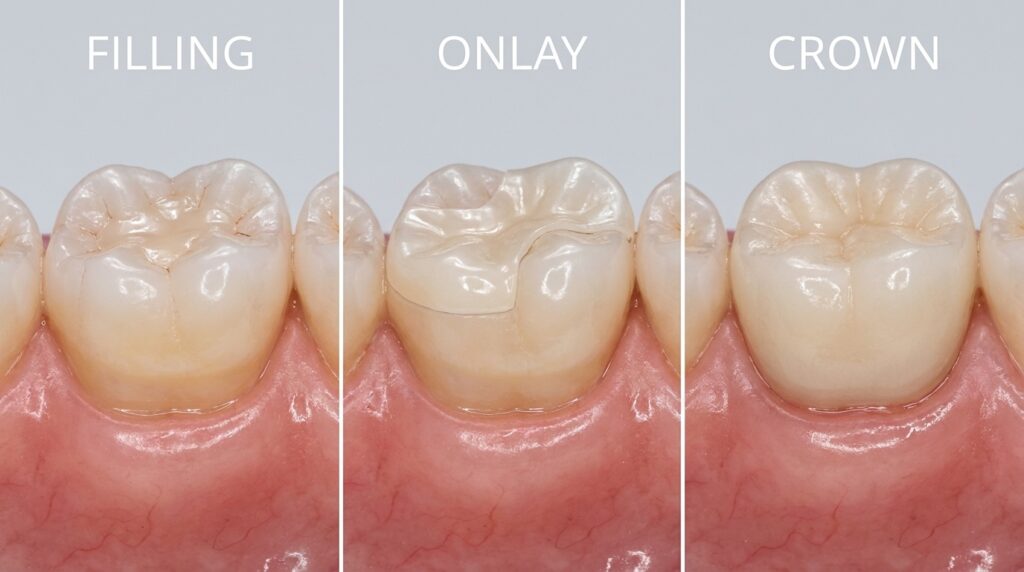
This is the table that makes the choice easy to see. The deciding factor is how much intact, healthy tooth structure remains.
| Factor | Filling | Onlay | Crown |
| Tooth structure lost | Less than half | Moderate, one or more cusps damaged | More than half, or after root canal |
| Covers | The cavity only | The biting surface plus damaged cusps | The entire tooth above the gumline |
| Strength added | Minimal | Moderate, adds rigidity | Maximum, protects the full crown |
| Ideal for | Small to medium decay | Cracked cusps, moderate damage | Large restorations, fractures, root-canal teeth |
| Typical visits | 1 | 1 to 2 | 2 |
| Average cost range in Singapore | $80 to $400 | $500 to $1,200 | $700 to $2,500 depending on material |
As Singapore dentists, we preserve as much healthy tooth as possible, but never leave a tooth so weakened that a modest restoration fails prematurely. If a filling would cover more than half the tooth, a crown is usually the more durable choice.
What Happens When You Don’t Crown A Tooth That Needs One?
Without the protection of a crown, a weakened tooth is more likely to split under normal chewing pressure. A cracked tooth can expose the nerve, causing pain, and it frequently leads to root canal treatment. In the worst cases, the tooth fractures below the gumline and must be extracted, after which the replacement options, an implant or a bridge, cost several times more than the crown would have.
Early treatment often helps preserve more natural tooth structure and may involve a simpler clinical process compared with treating complications later.
Crown Materials: What You Need To Know
The material affects durability, appearance and price. Here is how the most common options in Singapore compare.
| Material | Pros | Cons |
| Porcelain-fused-to-metal (PFM) | Strong, affordable, natural-ish | Metal edge may show at gumline |
| All-ceramic (e.max) | Excellent aesthetics, no metal | Slightly less strong than zirconia |
| Zirconia | Extremely strong, metal-free | Opaque, less translucent |
| Full metal (gold alloy) | Most durable, minimal wear on opposing tooth | Not aesthetic, used mainly for molars |
Your dentist will match the material to the tooth’s location and the forces it faces. Front teeth suit all-ceramic for aesthetics; back molars often benefit from the strength of zirconia or metal.
The Crown Procedure: What To Expect
The process is straightforward and, for most patients, takes two visits.
- Your dentist numbs the tooth, removes decayed or damaged structure, and shapes the tooth so a crown fits over it.
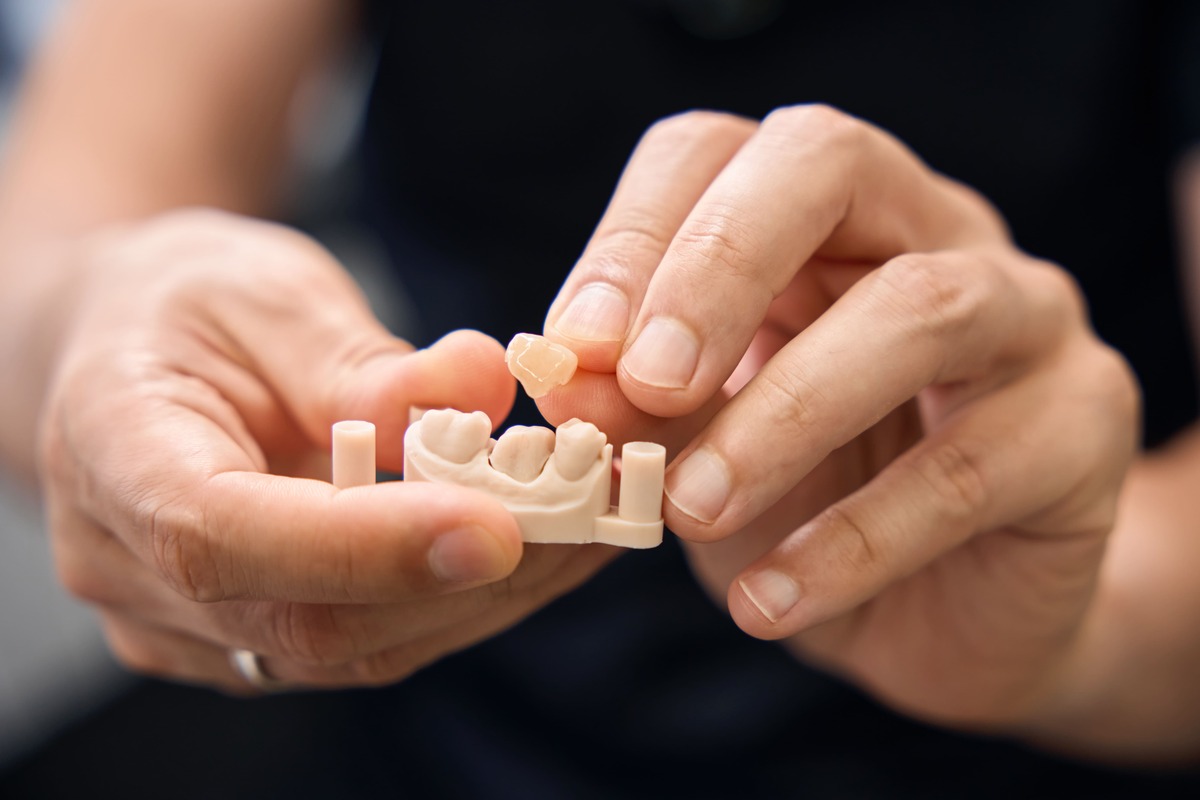
- An impression or digital scan is taken and sent to a lab.
- You wear a temporary crown for about one to two weeks while the permanent one is made.
- At the second visit, the permanent crown is checked for fit and bite, then cemented in place.
With digital scanning, clinics such as Elements Dental can create a more comfortable crown experience. Instead of using traditional impression materials, a digital 3D scan is taken in the chair to capture the shape of your teeth accurately, making the process quicker and more comfortable. This is not suitable in every case, particularly for complex or heavily restored teeth, but it removes the temporary crown stage entirely.
Cost, Longevity And Value: The Long-Term Picture
A well-made crown is a long-term investment in the tooth, not just a repair.
A PFM or zirconia crown lasts on average 10 to 15 years, and with excellent care, many exceed 20. The crown itself does not decay, but the tooth underneath can, so brushing, flossing, and regular check-ups directly extend its life.
The real value shows up over time. A tooth left unprotected until it fractures often ends up needing an implant or bridge, both of which involve a longer and more invasive treatment process.
Placed at the right time, a crown is usually the more conservative and more affordable path to keeping your natural tooth for good.
A note on cost: CHAS dental subsidies are capped — both by a maximum dollar amount per procedure (which varies by card tier) and by how many times a procedure can be claimed per calendar year. Some clinics also assist with MediSave for certain surgical cases. Confirm your exact entitlement and any subsidised options with your clinic before committing.
How To Talk To Your Dentist About Crown Recommendations
A good dentist will explain the reasoning, not just the recommendation. Before agreeing to a crown, ask these questions:
- How much healthy tooth structure is left, and why is a filling or onlay no longer sufficient?
- Which material is recommended for this tooth and why?
- What is the full, itemised cost, including the temporary crown and scans?
- Is a same-day crown an option for my case?
- What is the expected lifespan, and what could I do to extend it?
A dentist should be able to explain the clinical reasoning behind a crown recommendation, including the structural condition of your tooth and why other restoration options may not be suitable.
If you would like additional clarity on any treatment recommendation, you are welcome to ask more questions or seek a further consultation. A collaborative approach helps you make an informed decision about your dental care.
The Right Time for a Dental Crown in Singapore Is Now
The right restoration is the one that protects your tooth for the longest time. If you have more than half a tooth lost to decay or fracture, a failing large filling, or a root canal, a dental crown in Singapore is usually the soundest investment in keeping your natural tooth.
Caught early, it is a predictable and affordable procedure; left too late, the same tooth can cost several times more to replace.
If you are unsure which option suits your tooth, book a consultation at Elements Dental. We will assess the damage, walk you through the filling, onlay or crown options with a transparent, itemised quote, and recommend the restoration designed to last.
Your natural tooth is worth protecting: let us help you keep it.
Frequently Asked Questions
Can a crown fail?
Yes, and it is usually for reasons unrelated to the crown itself. The most common causes are decay at the crown margin, the cement wearing away, or the crown becoming loose over time. Attending regular check-ups catches these early, while they are easily repaired.
Is a root canal always necessary before a crown?
No. A crown is only preceded by root canal treatment if the nerve is already infected or exposed, or if the tooth is so damaged that the nerve cannot survive. If the pulp is healthy, the tooth can be crowned without one.
How do I care for a crown?
Care for a crown the way you would any tooth. Brush twice daily, floss gently at the gumline where the crown meets the tooth, and avoid hard items like ice or pens. Consistent hygiene does more for a crown’s lifespan than almost anything else.
What if I want a filling first instead?
If the damage is within the threshold for a filling, that is reasonable and more conservative. But if half or more of the tooth is compromised, a filling tends to fail faster, and the eventual crown costs more because more tooth has been lost. Your dentist’s recommendation is based on preserving the tooth long term.
Is a crown better than a veneer?
They serve different purposes. A veneer is a thin shell bonded to the front surface for purely cosmetic improvement, while a crown covers the whole tooth and provides structural strength. If a tooth is structurally weakened, a crown is the correct treatment; a veneer would not protect it.