AI Summary
Modern orthodontics in Singapore now offers evidence-based alternatives to a dental extraction for many patients with crowded teeth. This guide explains the case criteria, the clinical techniques behind non-extraction alignment, and what to expect from the journey. Orthodontics has moved well beyond the era when pulling premolars was the automatic answer to a crowded smile. For many patients in Singapore, a dental extraction is no longer the default first option. Here is how modern non-extraction planning works, and which techniques make it possible.
Hearing that four teeth need to come out for braces can be unsettling, especially when you’re not sure why. At Elements Dental, we find patients often assume dental extraction is a fixed rule of orthodontics, but in reality it depends on your specific arch width and crowding pattern. Modern tools like palatal expanders and TADs can create space without removing healthy teeth in many cases.
This guide explains when extraction is genuinely needed and when it isn’t.
Key Takeaways
- Extraction is no longer the automatic first step for crowded teeth, though it’s still necessary in some cases.
- Tools like palatal expanders and TADs can create space by widening the arch or repositioning molars, rather than removing teeth.
- 3D scanning lets you see a predicted outcome before treatment starts, so there’s less guesswork involved.
- Whether non-extraction suits you depends on your specific arch width, crowding severity and bite, not on which type of braces you choose.
What Does a Dental Extraction Usually Involve?
A simple extraction removes a visible tooth that’s easy to access, while a surgical extraction involves an incision, typically for impacted teeth or broken roots.
In Singapore, wisdom tooth removal is widely considered one of the most common surgical extractions, particularly among young adults.
After any extraction, a blood clot needs to form and stay in place for proper healing.
| Do | Don’t |
| Bite on gauze as instructed | Spit forcefully |
| Rest for the first day | Use a straw |
| Eat soft, cool foods | Do strenuous exercise |
| Contact your dentist if bleeding persists | Smoke |
Why Non-Extraction Orthodontics Is Gaining Ground
Extracting four premolars before fitting braces became common practice in the mid-20th century.
However, extraction can change facial appearance. Removing premolars and retracting the front teeth reduces support for the lips and cheeks, which can flatten the profile. Because of this, some clinicians now weigh facial appearance more heavily when planning treatment, rather than focusing only on tooth alignment. This shift has shaped how orthodontics in Singapore approaches crowded teeth today, with less reliance on extraction as a default step.
Some clinicians have also worried that extraction narrows the airway, since less room is left for the tongue. A 2025 systematic review in the European Journal of Orthodontics found no evidence for this. Airway volume wasn’t reduced, and one measurement even increased slightly, though the evidence was rated moderate strength.
Facial profile and personal preference remain valid factors to discuss with your orthodontist. Airway alone isn’t a strong reason to avoid extraction.
Are You a Candidate? The Clinical Criteria
Whether non-extraction treatment suits you depends on a few specific factors your orthodontist will assess before recommending a plan.
- Crowding severity. Measured in millimetres through space analysis, comparing the space available in your jaw against the space your teeth need.
- Arch width. A narrow dental arch is often the real cause of crowding, rather than simply having too many teeth for the space.
- Digital scan results. Tools like intraoral scanners or CBCT imaging let your orthodontist simulate a predicted outcome before any treatment begins.
- Simulation outcome. If the simulation shows extraction is genuinely the only viable path for your case, a properly run consultation will say so directly, rather than defaulting to the easiest option to sell.
None of these criteria works in isolation. Your orthodontist should weigh them together against your specific scans, not apply a general rule to every case.
Modern Non-Extraction Techniques
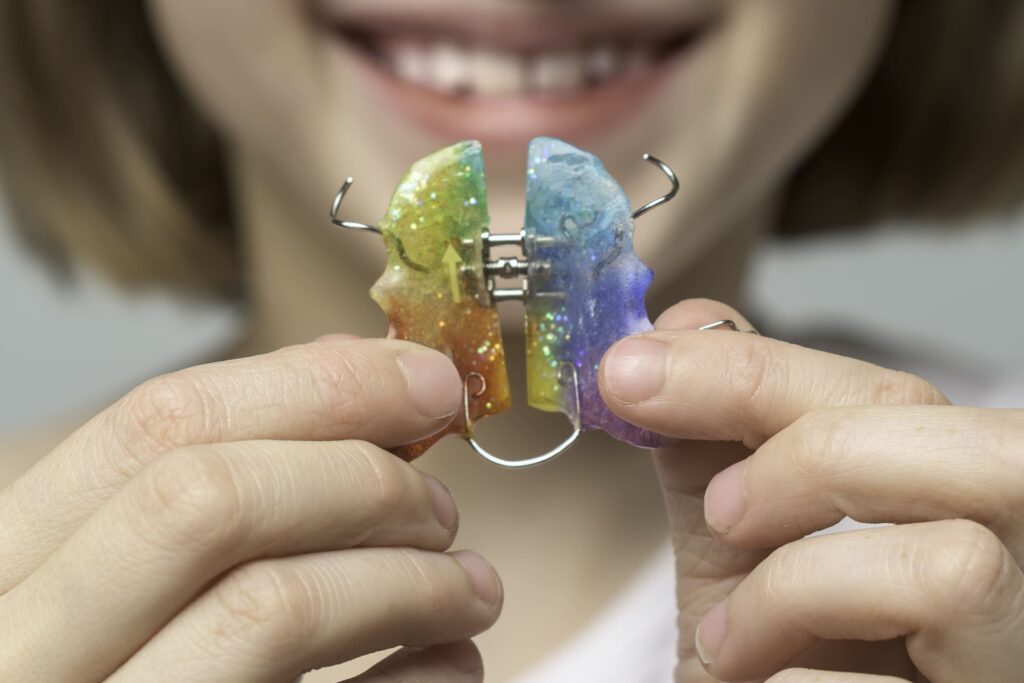
A few key appliances and techniques make non-extraction treatment possible for cases that once would have required removing teeth.
- Palatal expanders and MARPE. These appliances widen a narrow upper jaw, creating space for crowded teeth without pulling any teeth backwards. MARPE (mini-screw assisted rapid palatal expansion) is often suitable for teenagers and adults whose growth plates have already fused.
- TADs and distalisation. Temporary anchorage devices are small, removable mini-implants that act as an anchor point, allowing molars to be moved backwards as a group. This can create front-tooth space without removing premolars.
- Clear aligners and lingual braces. Both can deliver non-extraction results, but the appliance itself doesn’t determine whether extraction is needed. The underlying treatment planning and tooth-movement mechanics decide that, regardless of the system used.
These techniques work best when matched to your specific crowding pattern, which is why the diagnosis stage matters more than choosing an appliance brand.
What to Expect: The Treatment Journey
- The consult. Expect a thorough first visit covering your medical history, 3D imaging and a proper discussion of your concerns, rather than a rushed assessment.
- The treatment plan. Your orthodontist should explain the specific mechanics involved, such as expansion or distalisation, along with a phased cost breakdown. Treatment duration varies by case, so ask for a timeline based on your own scans rather than a general figure.
- Active treatment. Regular check-ups, adjustments and mild discomfort after each appointment are normal parts of the process, whether you’re wearing aligners or fixed braces.
Post-Treatment Care
Good oral hygiene matters more with braces or aligners in place, since food particles collect more easily around brackets or trays. Cutting harder foods into smaller pieces, rather than avoiding them altogether, usually works well.
Mild soreness after adjustments is common and typically responds to a cold compress or warm salt water rinse. This discomfort is generally milder than the recovery period after having a tooth extracted.
Retainers are essential after treatment finishes. Without consistent wear, teeth tend to drift back toward their original position over time.
Dental Extraction vs Non-Extraction Orthodontics in Singapore
Dental extraction is still sometimes necessary, but it’s no longer the automatic starting point for crowded teeth. The need for it usually comes down to arch width and crowding severity, not just how many teeth need to fit. Tools like palatal expanders, MARPE, and TADs can create space without removing premolars in many cases, while facial profile and airway are separate factors worth weighing alongside your treatment plan.
At Elements Dental, every treatment plan starts with a proper 3D assessment, so you can see a simulation of your options before deciding on anything permanent. Book an appointment to find out if non-extraction treatment is right for your case.
Frequently Asked Questions
Is non-extraction treatment always possible in Singapore?
Not always. Severe crowding or significant skeletal mismatch may still require extraction, or occasionally surgery. A clinical evaluation is the only way to know for certain.
Will I need to wear a retainer forever?
Long-term retainer wear is standard after any orthodontic treatment to prevent teeth from shifting back. Both removable and fixed options are available.
Does non-extraction treatment take longer?
Some non-extraction techniques involve moving bone, which can take time, though this is often offset by not needing an initial extraction healing period. Timelines vary by case.
Can non-extraction treatment help with a gummy smile or jaw clicking?
TADs can sometimes reduce a gummy smile by repositioning the front teeth. Jaw clicking needs a separate TMJ evaluation, since orthodontic movement alone typically doesn’t resolve it.
Is non-extraction treatment more expensive?
Appliances like expanders or TADs add to the orthodontic fee, though this may be offset by avoiding extraction-related costs. Ask for a full quote before you commit to a plan.