

What Is a Dental Extraction?
A dental extraction is the removal of a tooth from its socket in the jaw. It may be recommended when a tooth is badly decayed, fractured, infected, loose due to gum disease, or positioned in a way that affects nearby teeth and oral health.
In Singapore, dental decay and gum disease remain common oral health concerns. A 2019 nationally representative oral health survey found that 34.8% of adults had untreated dental caries, while 77.6% had periodontal disease.
Dental caries and gum disease are recognised contributors to tooth loss. Early assessment and preventive care may help manage these conditions before extraction becomes necessary.
At Elements Dental, we take a restorative-first approach. This means we will assess whether the tooth can be saved before recommending extraction.
Where removal is needed, your dentist will first carry out a clinical examination, take X-rays where necessary, explain the findings clearly, and guide you through the treatment process.
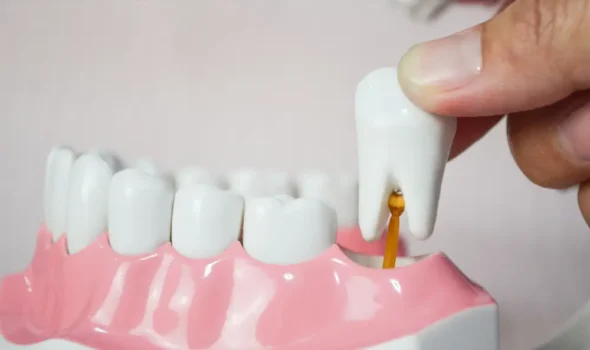
When Is a Tooth Extraction Necessary?
A tooth extraction may be needed when keeping the tooth is no longer suitable, safe, or predictable.
This decision is based on a proper dental assessment, not guesswork. Your dentist will examine the tooth, check the surrounding gums and bone, and use X-rays, when needed, to understand the condition beneath the surface.
Tooth extraction may be recommended for:
- Severe tooth decay: When decay has damaged too much of the tooth structure, a filling or crown may no longer be enough to restore it.
- A broken tooth that cannot be repaired: If a tooth is fractured deeply or broken below the gum line, it may not be possible to rebuild it properly.
- An infection that may spread: A badly infected tooth may need to be removed if it cannot be treated safely with root canal treatment or other restorative options.
- Advanced gum disease: Gum disease can weaken the bone and tissue supporting the tooth, leading to tooth loosening.
- Impacted or problematic teeth: Some teeth may be trapped, poorly positioned, or difficult to clean, increasing the risk of pain, infection, or damage to nearby teeth.
- Orthodontic or space-related reasons: In selected cases, a tooth may need to be removed as part of a wider treatment plan to create space or improve alignment.
- Persistent pain with a poor long-term prognosis: If a tooth is unlikely to recover or respond well to treatment, extraction may be a more predictable option.
Where possible, your dentist will also discuss whether the tooth can be saved and what replacement options may be considered after removal.
Simple vs Surgical Extraction
Dental extractions are generally grouped into simple and surgical extractions. The right approach depends on the tooth’s accessibility, condition, root shape, surrounding bone, and the position of nearby teeth.
| Type of Extraction | When It May Be Used | What It Usually Involves |
|---|---|---|
| Simple extraction | The tooth is visible, accessible, and can be removed without making an incision in the gum. | The dentist gently loosens and removes the tooth under local anaesthesia. |
| Surgical extraction | The tooth is broken, difficult to access, covered by gum or bone, or has complex roots. | The dentist may need to make a small incision, remove some surrounding bone, or section the tooth into smaller parts. |
Your dentist will decide which method is needed after examining your tooth and reviewing your X-rays. A case that looks simple from the outside may still require a surgical approach if the roots are curved, the tooth is brittle, or there is limited access.
This page focuses on non-wisdom tooth extractions. Wisdom tooth removal may involve a different assessment and treatment approach.
For a closer look at the procedure and recovery experience, see our guide on what to expect before, during, and after a dental extraction
What Happens During a Dental Extraction?
Knowing what to expect can help reduce anxiety before your appointment. At Elements Dental, your dentist will explain the steps clearly before treatment begins.
1. Consultation and examination
Your dentist will check the affected tooth, the surrounding gums, your bite, and your overall oral condition. Photos may also be taken to help with the discussion. You may also be asked about your symptoms, medical history, allergies, and current medication.
2. X-rays and treatment planning
X-rays may be taken to assess the tooth roots, bone level, infection, and the position of nearby structures. This helps your dentist decide whether the extraction is likely to be simple or surgical.
3. Explanation of findings and options
Before proceeding, your dentist will explain what is happening, whether the tooth can be saved, what the extraction involves, and what you should expect after treatment.
4. Local anaesthesia
The area around the tooth will be numbed with local anaesthesia. You should not feel sharp pain during the procedure, although you may feel pressure or movement.
5. Tooth removal
For a simple extraction, the tooth is gently loosened and removed. For a surgical extraction, additional steps may be needed depending on the tooth’s position, roots, or surrounding bone.
6. Bleeding control
After the tooth is removed, gauze will be placed over the area to help a blood clot form. This clot is important for healing.
7. Aftercare instructions
Your dentist will explain how to care for the area at home, including what to avoid, what to eat, how to clean your mouth, and when to contact the clinic if symptoms feel unusual.
The appointment duration varies depending on the tooth and case complexity. Your dentist can advise after assessment.
What to Expect After a Dental Extraction
Some bleeding, swelling, and soreness are normal after a dental extraction. These symptoms usually improve gradually over the next few days.
Normal recovery signs
You may experience:
- Mild bleeding during the first few hours
- Soreness after the numbness wears off
- Slight swelling around the area
- Tenderness when chewing
- Minor bruising in some cases
Aftercare tips
To support healing, you should:
- Bite gently on the gauze as instructed, if necessary.
- Avoid forcefully rinsing for the first 24 hours.
- Avoid smoking and alcohol during early healing.
- Avoid drinking through a straw, as suction can disturb the blood clot.
- Eat soft foods until chewing feels comfortable.
- Brush gently around the area.
- Take medication as prescribed or advised.
When to contact the clinic
Contact your dentist if you experience:
- Heavy bleeding that does not settle
- Severe pain that worsens after a few days
- Bad taste or odour from the extraction site
- Swelling that continues to increase
- Fever
- Pus or signs of infection
- Numbness that does not improve after the anaesthetic wears off
Tooth Extraction Cost in Singapore
The cost of tooth extraction in Singapore depends on the complexity of the case. A simple extraction usually costs less than a surgical extraction because it is generally faster and less complex.
The final cost may depend on:
- Whether the extraction is simple or surgical
- The position of the tooth
- The number and shape of the roots
- Whether the tooth is broken or difficult to access
- Whether X-rays are required
- Whether medication, stitches, or review appointments are needed
- Whether you are eligible for CHAS or other subsidies
As a reference, MOH’s dental fee benchmarks for routine and typical cases at private CHAS dental clinics list anterior extraction at $70 to $120 and posterior extraction at $93 to $164, excluding GST.
Actual fees may vary depending on the complexity of the case, whether X-rays are needed, and whether the extraction is simple or surgical.
Elements Dental is a CHAS-accredited clinic. Eligible patients may use CHAS, Merdeka Generation, and Pioneer Generation subsidies for selected dental procedures.
From 1 October 2025, CHAS dental subsidies for extraction are listed as follows:
| Procedure | CHAS Orange | CHAS Blue | Merdeka Generation | Pioneer Generation |
|---|---|---|---|---|
| Anterior extraction | Up to $19.00 | Up to $28.50 | Up to $33.50 | Up to $38.50 |
| Posterior extraction | Up to $45.50 | Up to $68.50 | Up to $73.50 | Up to $78.50 |
Note: CHAS subsidies are subject to eligibility, procedure type, and claim limits. For extractions, CHAS states a limit of up to 4 extractions per calendar year, shared across all types of extractions. The final payable amount can only be confirmed after your dentist has assessed your tooth.
Using MediSave for Dental Extractions
MediSave is generally not used for routine, simple extractions. It may apply to selected dental surgical procedures that meet CPFB or MOH claim criteria, such as certain wisdom tooth surgeries or other medically necessary procedures.
For wisdom tooth surgery, Medisave may be claimed under the day surgery scheme, subject to fixed operation limits set by CPF and clinical assessment of complexity. Eligibility and the claimable amount depend on the type of surgery performed and accreditation requirements.
Eligibility depends on the procedure type, clinical assessment, and whether the clinic or practitioner is accredited. Please check with Elements Dental before treatment.
Can the Tooth Be Saved Instead?
Not every painful or damaged tooth needs to be removed. At Elements Dental, we will first assess whether the tooth can be preserved before recommending extraction.
Possible alternatives may include:
Dental filling: Repairs smaller areas of decay when enough healthy tooth structure remains.
Dental crown: Protects and strengthens a weakened or heavily restored tooth.
Root canal treatment: Treats infection or inflammation inside the tooth while preserving the natural tooth, where suitable.
Gum treatment: Helps manage gum disease when the supporting tissues around the tooth are affected.
Inlay or onlay: Restores larger damaged areas when a standard filling may not provide enough strength.
Tooth replacement planning: If extraction is necessary, your dentist may discuss options such as dentures, bridges, or dental implants, depending on your suitability.
The best option depends on the condition of the tooth, gum and bone support, bite function, symptoms, and long-term prognosis.
Why Choose Elements Dental in Bukit Timah for Your Tooth Extraction?
Choosing the right clinic matters, especially when you are in pain, anxious, or unsure whether your tooth needs to be removed.
At Elements Dental, patients can expect:
Clear explanations before treatment
We explain your tooth’s condition, the available options, and what the procedure entails before you decide.
Restorative-first philosophy
Extraction is recommended only when saving the tooth is no longer suitable or predictable.
Comfort-focused care
Our dentists provide gentle guidance throughout the appointment to help you feel more at ease.
X-rays and proper assessment
Treatment is planned based on clinical findings and X-rays, where needed.
CHAS-accredited clinic
Eligible patients may receive subsidies for selected dental services.
Convenient Bukit Timah location
Elements Dental is located at Dunearn Village, directly opposite King Albert Park MRT station on the Downtown Line.
FAQ on Dental Extraction in Singapore
The area is numbed with local anaesthesia before the extraction, so you should not feel sharp pain during the procedure. You may feel pressure or movement. Some soreness after extraction is normal and can usually be managed with proper aftercare and, if prescribed, medication.
Eligible CHAS cardholders may receive subsidies for selected dental extractions, subject to claim limits.
Medisave is generally not used for routine simple extractions, but may apply to selected surgical procedures such as wisdom tooth surgery, subject to CPF eligibility rules. Your dentist can advise after assessing your case.
Initial healing usually takes a few days, while the gum and socket continue healing over the following weeks. Recovery time depends on whether the extraction was simple or surgical, your general health, and how closely you follow aftercare instructions.
Choose soft foods such as porridge, soup, yoghurt, mashed potatoes, scrambled eggs, or soft noodles. Avoid hard, crunchy, spicy, and very hot foods during early healing, as these may irritate the extraction site.
Contact the clinic if you experience heavy bleeding, worsening pain, increasing swelling, fever, pus, persistent bad taste, or numbness that does not improve after the anaesthetic wears off.
A dry socket can happen when the blood clot at the extraction site is lost or disturbed too early. This may expose the bone and cause significant pain. To reduce the risk, avoid smoking, drinking through a straw, forceful rinsing, and disturbing the area during early healing.
It depends on which tooth was removed and how it affects chewing, appearance, and bite stability. Some missing teeth may need to be replaced with options such as dentures, bridges, or dental implants. Your dentist can advise based on your oral condition and goals.
Some patients can return to work the next day after a simple extraction, depending on their comfort and the nature of their work. Recovery varies between individuals. If the extraction was surgical or more complex, you may need more rest. Your dentist will advise based on your treatment.
Contact Us
Book a Dental Extraction Consultation
at Elements Dental
At Elements Dental, our dentists will assess the tooth, take X-rays where needed, and explain whether extraction or a tooth-saving treatment is more suitable.
Our clinic is located at Dunearn Village in Bukit Timah, directly opposite King Albert Park MRT station. This makes it convenient for patients living or working around Bukit Timah, King Albert Park, Beauty World, Sixth Avenue, and nearby areas.
To book an appointment, contact Elements Dental by phone, WhatsApp, or the enquiry form below.