

If you have been told you may need a dental extraction in Singapore, one of the first questions that often comes to mind is whether the tooth can still be saved. Some patients explore options like root canal or a crown, while others wonder what might happen if they delay treatment.
At Elements Dental, we have observed that this decision-making stage can be uncertain for many patients. In some cases, preserving a natural tooth may be possible. In others, extraction may be recommended based on the tooth’s condition and long-term prognosis. In this guide we’ll explain when extraction may be necessary, when a tooth may still be saved, and how these decisions are typically assessed.
Key Takeaways
- Preserving a natural tooth is generally preferred as it helps maintain jawbone support, chewing function, and alignment of neighbouring teeth.
- A dental extraction in Singapore may be recommended when a tooth is not restorable or presents ongoing risks such as infection or instability.
- Comparing root canal therapy vs extraction, or crown vs extraction, depends on the condition of the tooth and the expected long-term outcomes.
- Delaying treatment may lead to increased discomfort, progression of the infection, and more complex procedures later.
- A clinical assessment is important for determining whether to save or remove a tooth, based on individual circumstances.
Why Preserving a Natural Tooth Matters

Dentists generally aim to preserve natural teeth whenever possible, as they play an important role in maintaining overall oral health.
Keeping your natural tooth may help:
- Maintain jawbone density through natural stimulation
- Prevent neighbouring teeth from shifting
- Support proper bite alignment and chewing function
- Preserve facial structure and appearance
When a tooth is removed, the surrounding bone may gradually change over time. This can affect both function and stability, particularly if the missing tooth is not replaced.
Common Ways a Tooth May Still Be Saved
Before recommending extraction, dentists may consider treatment options that allow the tooth to be retained.
Root Canal Treatment
Used when infection affects the inner pulp but the outer structure remains stable. The infected tissue is removed while preserving the tooth.
Dental Crowns
Crowns are used to strengthen and protect teeth that have been weakened by decay or fractures.
Periodontal Treatment
For gum-related issues, stabilising the supporting structures may help retain the tooth.
Preservation is generally considered when the tooth can remain functional and stable over time.
When Extraction Is Necessary in Singapore
Although preserving a tooth is often preferred, there are situations where removal may be recommended.
Severe Decay or Structural Breakdown
If there is insufficient tooth structure remaining to support restoration, extraction may be considered.
Recurrent or Untreatable Infection
If infection persists despite treatment or has a poor prognosis, removal may help reduce the risk of further spread.
Advanced Gum Disease
Significant bone loss may result in loose teeth that cannot be stabilised effectively.
Fractures Below the Gumline
Cracks extending below the gumline or into the root are often not predictable to restore.
Impacted or Problematic Teeth
Impacted teeth, such as wisdom teeth, may cause discomfort or affect surrounding teeth.
Orthodontic or Space Requirements
Extraction may be part of treatment planning to support alignment.
Dentists typically consider the condition of the tooth, surrounding structures, and long-term outlook before making a recommendation.
Can This Tooth Be Saved or Should It Be Removed
Dentists typically assess several clinical factors before recommending whether a tooth should be preserved or removed. These include the extent of decay, the condition of the surrounding bone and gums, structural integrity, and the long-term outlook of the tooth. The table below outlines common situations and how dentists may approach each scenario. Because each case is individual, the table is intended as a general overview, not a diagnostic tool.
| Situation | Tooth May Be Saved | Extraction May Be More Likely |
| Decay | Enough healthy structure remains for restoration | Tooth severely broken down and unstable |
| Infection | Root canal has a favourable prognosis | Infection persists or recurs |
| Fracture | Crack is repairable and above gumline | Fracture extends below gumline or into root |
| Gum disease | Tooth can be stabilised with treatment | Severe bone loss and mobility present |
| Crowding or impaction | Alternative treatment may be possible | Extraction may be required |
Each situation varies, which is why an individual assessment is important.
Root Canal vs Extraction: How to Decide
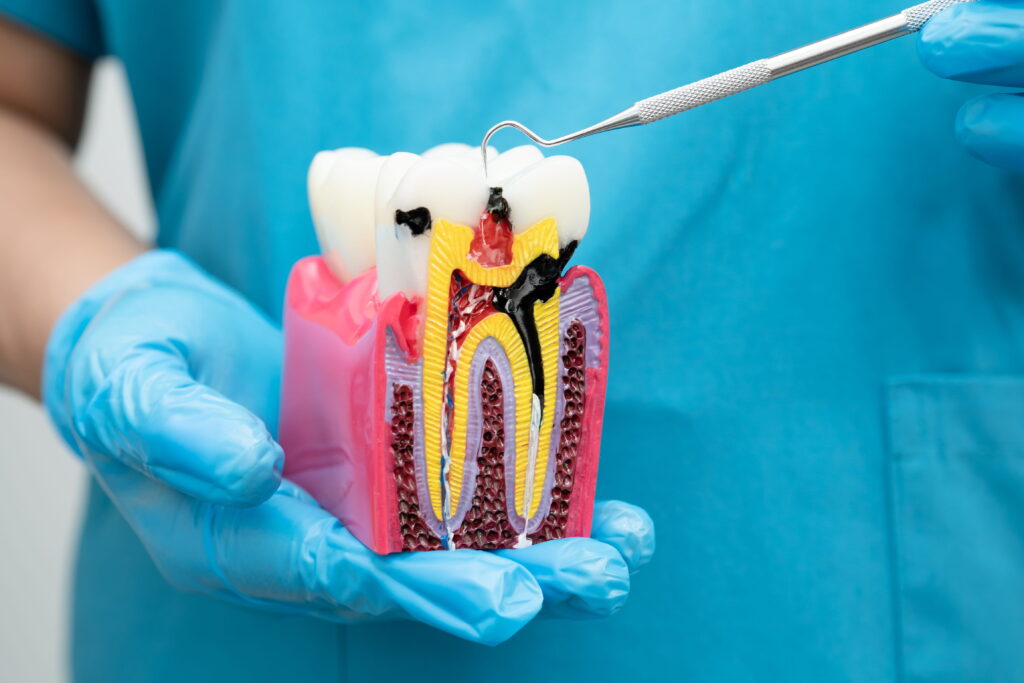
Choosing between root canal vs extraction is a common concern for patients with an infected tooth.
When Root Canal Treatment May Be Suitable
- Infection is localised and manageable
- Tooth structure is sufficient for restoration
- Long-term prognosis is considered favourable
Root canal treatment allows the tooth to be preserved while addressing infection.
When Extraction May Be Considered
- Infection is severe or recurrent
- Tooth structure is significantly compromised
- Previous treatments have not been successful
In these cases, extraction may be considered as part of a longer-term management approach.
Long-Term Considerations
The decision should take into account not only immediate relief but also the expected durability and function of the tooth over time.
Crown vs Extraction: When Is Restoration Still Appropriate
Dental crowns may be used to restore damaged teeth, but suitability depends on the remaining tooth structure.
When a Crown May Be Suitable
- Adequate tooth structure remains
- Roots are stable
- Infection is controlled or absent
When Extraction May Be More Appropriate
- Insufficient structure to support a crown
- Damage extends below the gumline
- Structural integrity is significantly compromised
In some cases, placing a crown on a weakened tooth may not provide a predictable long-term outcome.
Can a Cracked Tooth Still Be Saved
A cracked tooth may or may not require extraction, depending on the severity and location of the crack.
Situations Where the Tooth May Be Saved
- Minor cracks affecting outer layers
- Damage that can be stabilised with crowns or bonding
Situations Where Extraction May Be Required
- Cracks extending into the root
- Vertical fractures that split the tooth
- Structural compromise affecting stability
Early evaluation may improve the chances of preserving the tooth.
What Happens If You Delay Treatment
Delaying treatment for a damaged or infected tooth may affect both symptoms and treatment options.
If left untreated, the condition may progress:
- Infection may extend to surrounding tissues
- Pain and sensitivity may increase
- Structural damage may worsen
- More complex procedures may be required
In some situations, delayed treatment may necessitate surgical intervention rather than simpler procedures. Early assessment may provide more options and may reduce the risk of complications.
Replacing Extracted Teeth: Why It May Be Recommended
If extraction is necessary, replacing the missing tooth may be discussed as part of long-term care.
Dental Implants
Dental implants are one option for replacing missing teeth. They are typically placed into the jawbone and may help maintain bone structure over time.
Dental Bridges
Dental bridges rely on adjacent teeth for support and may be used when replacing one or more teeth.
Partial Dentures
Removable options may be used when replacing one or more missing teeth.
Replacement options are typically discussed based on the location of the tooth and overall treatment goals.
Questions to Ask Before Agreeing to Tooth Extraction
Before making a decision, it is helpful to clarify your options with your dentist.
You may consider asking:
- Can this tooth be saved based on my current condition
- What are the possible risks of keeping or removing the tooth
- What may happen if treatment is delayed
- Will additional treatment be needed after extraction
- What is the expected long-term outcome of each option
These questions may help you make a more informed decision.
Consequences of Not Treating a Problem Tooth
Not treating a damaged or infected tooth may lead to further complications over time.
- Infection may spread locally
- Neighbouring teeth may be affected
- Bite alignment may change
- Bone support may gradually reduce
- Symptoms such as pain may persist or worsen
Addressing the issue early may help reduce these risks.
Next Steps If You’re Unsure About Tooth Extraction
Deciding whether to save or remove a tooth involves considering both current symptoms and long-term outcomes. The most appropriate option will depend on your specific dental condition, overall oral health, and treatment goals.
At Elements Dental, we support patients by providing clear explanations of their condition and outlining suitable treatment options. If you are unsure whether a dental extraction in Singapore may be necessary, you may arrange a consultation for a clinical assessment and personalised advice.
Frequently Asked Questions
Can a previously treated tooth still be saved
In some cases, additional treatment may be considered, depending on the condition of the tooth and surrounding structures.
How do dentists assess whether a tooth is restorable
Dentists evaluate the amount of remaining structure, root condition, bone support, and overall prognosis.
Is it better to remove a tooth early rather than wait
The timing depends on the condition of the tooth. Early assessment may help determine the most appropriate approach.
Do all missing teeth need replacement
Not always. The need for replacement depends on the location of the tooth and its impact on function and alignment.
Can delaying treatment affect future treatment options
Yes, delaying care may limit available options and may lead to more complex treatment later.