
Maintaining oral health is an important part of overall well-being. From speaking clearly to eating comfortably, your teeth and gums play an important role in daily life.
Visiting our Bukit Timah dental clinic can help ensure your teeth and gums receive appropriate preventive, restorative, and specialised care. Our dentists offer a range of services to address different oral health needs, from routine check-ups to more complex treatments.
By understanding the treatments available at our Bukit Timah dentist, you can make more informed decisions about your oral care. Dental services may be grouped into the following areas: general dentistry, endodontics, aesthetic dentistry, restorative dentistry, orthodontics, and paediatric dentistry. Below is an overview of the common services within each category.
Key Takeaways
- Visiting our Bukit Timah dental clinic can support oral health through a range of preventive and specialised services.
- General dentistry focuses on routine care, such as exams, cleanings, and consultations, to detect and resolve issues before they become severe.
- Specialised treatments such as root canal therapy, crowns, and implants help save or replace damaged teeth and restore your bite.
- Procedures such as teeth whitening, veneers, braces, and Invisalign can enhance the appearance and alignment of your smile.
- Early intervention through paediatric care and consistent check-ups is essential for preventing pain and protecting your long-term dental well-being.
General Dentistry
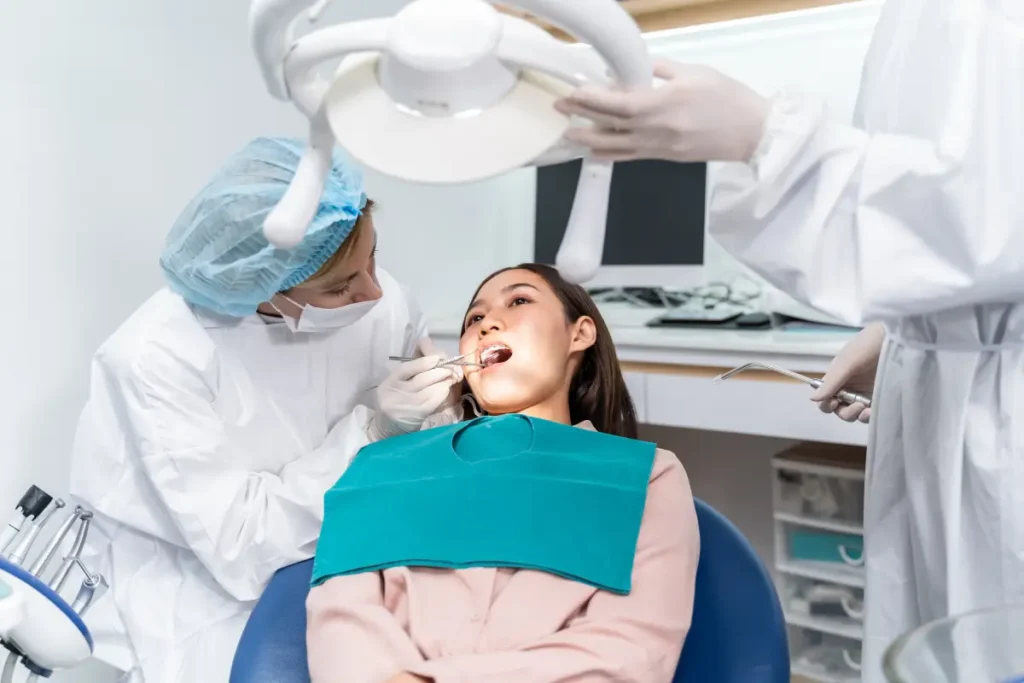
General dentistry serves as the fundamental layer of oral healthcare. It focuses heavily on preventive care, early diagnosis, and managing the overall health of the teeth and gums. Dental practitioners in this field assess the overall condition of the teeth, gums, and surrounding oral structures, and may recommend preventive care or further treatment where appropriate.
Services under general dentistry include:
Consultation
A consultation at our Bukit Timah dental clinic is the first step toward understanding your oral health needs.
During this session, the dental clinician takes the time to discuss your medical and dental history. This involves understanding any pre-existing health conditions, medications you are currently taking, and any specific concerns or goals you have regarding your smile.
Patients who come in for a consultation might have tooth sensitivity, jaw discomfort, or aesthetic preferences. The dentist listens carefully and uses this information to map out a personalised treatment plan.
Oral Exams
Regular oral examinations help detect dental issues that may not yet be causing pain.
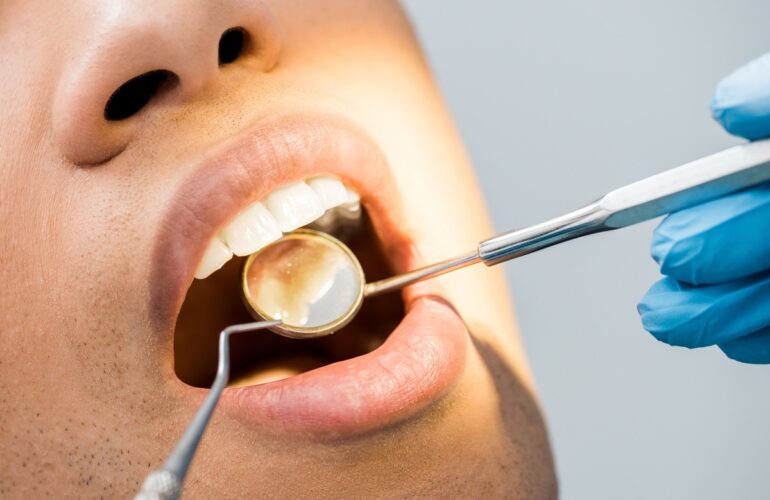
Unlike a simple visual check you might perform at home, clinical examinations involve checking the teeth for signs of decay, assessing the gums for inflammation or periodontal disease, and evaluating the condition of existing restorations, such as fillings or crowns.
Dental practitioners also look at the soft tissues of the tongue, the roof and floor of the mouth, and the throat for any abnormalities.
Professional Teeth Cleaning
Even with regular brushing and flossing, plaque can build up on the teeth, particularly along the gum line and between teeth. If it is not removed thoroughly, plaque can harden into tartar. Unlike plaque, tartar cannot be removed through routine brushing alone and usually requires professional cleaning.
During a teeth cleaning session at our Bukit Timah dental clinic:
- Dental practitioners use specialised instruments to remove plaque and tartar from the tooth surfaces. This process is known as scaling.
- After scaling, the teeth are typically polished with a slightly abrasive paste to remove external stains and leave the teeth feeling smooth and clean.
Fluoride Treatments
Fluoride is a naturally occurring mineral that helps strengthen tooth enamel and reduce the risk of tooth decay. It helps strengthen enamel and makes it more resistant to decay.
Fluoride treatments provided in a clinic may involve applying a highly concentrated fluoride gel, foam, or varnish directly to the teeth. This is a quick, non-invasive procedure often recommended for children as their permanent teeth develop.
Fluoride treatments may also be recommended for adults who are at higher risk of tooth decay, depending on factors such as diet, oral hygiene, saliva flow, and clinical history.
Wisdom Tooth Surgery
Wisdom teeth, or third molars, are the last set of teeth to emerge, usually in the late teens or early twenties.
In many cases, the jaw lacks sufficient space to accommodate these extra molars, leading to impaction.
Impacted wisdom teeth can grow at various angles, push against adjacent teeth, or fail to emerge fully through the gum line. This can lead to pain, infection, decay in neighbouring teeth, or even the development of cysts.
Wisdom tooth surgery is a common clinical procedure in which a dentist surgically removes the problematic tooth.
Endodontics
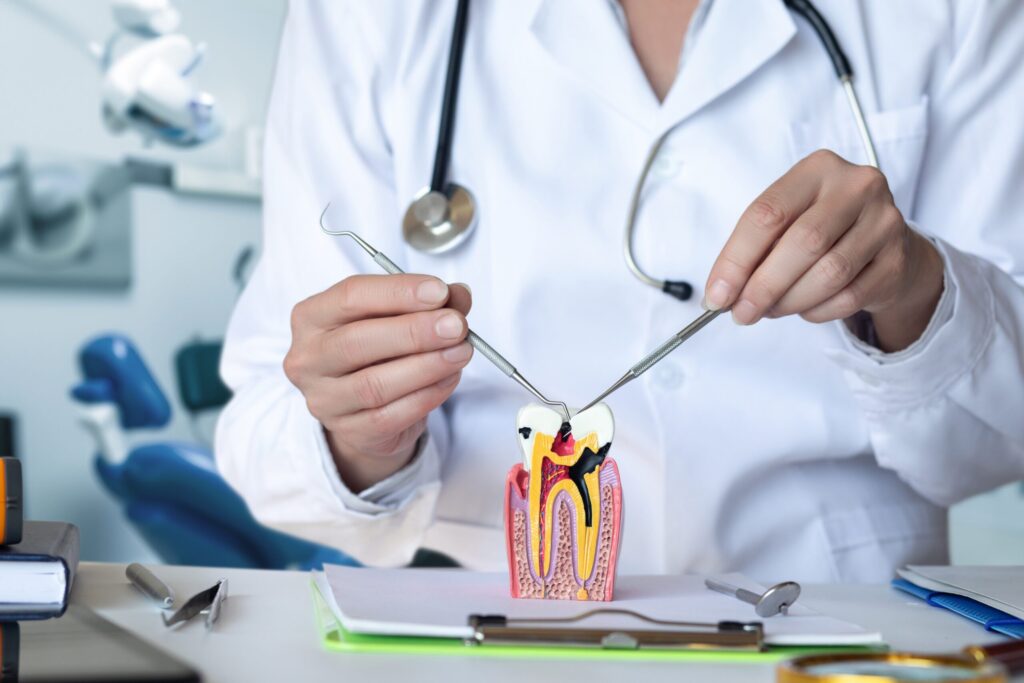
Endodontics is a specialised branch of dentistry that focuses on the treatment of the dental pulp and the tissues surrounding the roots of a tooth.
The dental pulp contains blood vessels, nerves, and connective tissue, which can become infected or inflamed due to decay. Endodontic treatments help preserve teeth that might otherwise need to be removed.
Root Canal Treatment
When a tooth’s pulp becomes severely infected or inflamed, the tooth cannot heal on its own. If left untreated, the infection can cause an abscess. This abscess can result in bad breath, swelling, fever, or worse, tooth loss.
During root canal therapy, the dentist creates a small opening in the crown of the tooth to access the infected pulp. The damaged tissue is carefully removed, and the root canals are cleaned, shaped, and disinfected.
Finally, the canals are filled with a biocompatible material and sealed.
Apicoectomy
Unlike a non-surgical root canal that accesses the infection through the crown of the tooth, an apicoectomy involves a small incision in the gum tissue to reach the root tip directly through the jawbone.
The dentist removes the infected tissue and the tip of the root itself, then cleans and seals the end of the root canal with a small filling to prevent future bacterial leakage.
While it is considered a more invasive option than a standard root canal, it is a conservative alternative to tooth extraction and is often the final clinical step used to preserve a tooth that remains symptomatic after multiple treatments.
Aesthetic Dentistry
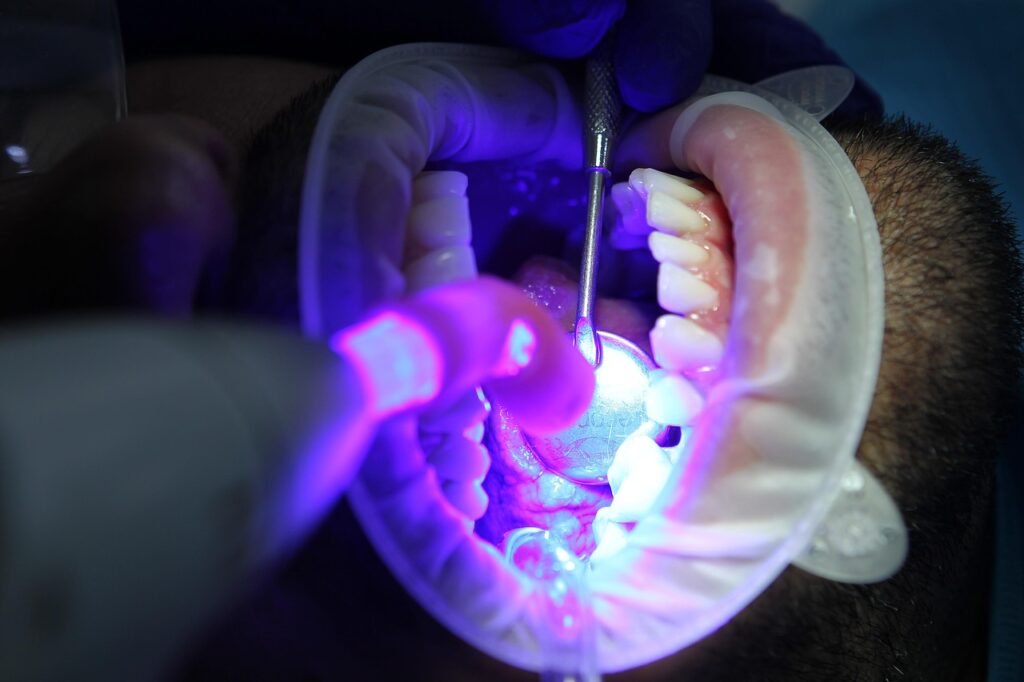
Aesthetic dentistry focuses on enhancing the appearance of teeth and smiles. It primarily addresses visual elements such as tooth colour, position, shape, size, and alignment.
Our Bukit Timah dentist can provide various aesthetic treatments designed to help patients feel more comfortable with the look of their smiles.
Usual aesthetic dental procedures include:
Teeth Whitening
Over time, teeth can become discoloured or stained, whether through the foods we eat, such as coffee, tea, and red wine, or through improper hygiene habits we adopt. The natural ageing process can also cause the enamel to lose its brightness.
Teeth whitening is a popular option for brightening the smile. Dentists use bleaching agents that are stronger than those available in over-the-counter products, allowing for a more noticeable change in shade.
Veneers
Dental veneers are thin, custom-made shells of porcelain or composite resin that are bonded to the front surfaces of teeth.
They are designed to replicate the natural appearance of teeth and enhance the overall smile.
Veneers are a solution for addressing a variety of aesthetic concerns, including severely discoloured teeth that do not respond to whitening, chipped or worn teeth, and slightly misaligned or gap-filled teeth.
Dental Bonding
Dental bonding is a procedure in which a tooth-coloured resin material is applied to the tooth and hardened with a special light. This allows the material to bond to the tooth surface and restore minor damage or areas affected by decay, where appropriate.
Bonding is often used to repair chipped or cracked teeth, close small spaces between teeth, or improve the appearance of teeth with minor shape irregularities.
It can also be used to enhance the shape and overall appearance of the teeth in suitable cases.
It is generally considered a conservative treatment, as it often requires little to no removal of healthy tooth structure, depending on the clinical situation.
Gum Contouring
Gum contouring, also known as gum reshaping, is a procedure that alters the shape or size of the gum line.
Some patients feel their teeth appear too short because excessive gum tissue covers the enamel, sometimes referred to as a “gummy smile.”
Dentists use specialised instruments to remove excess gum tissue or reshape the gums to create a more balanced and symmetrical appearance. This procedure can also make it easier to maintain oral hygiene by reducing areas where bacteria can accumulate.
Restorative Dentistry
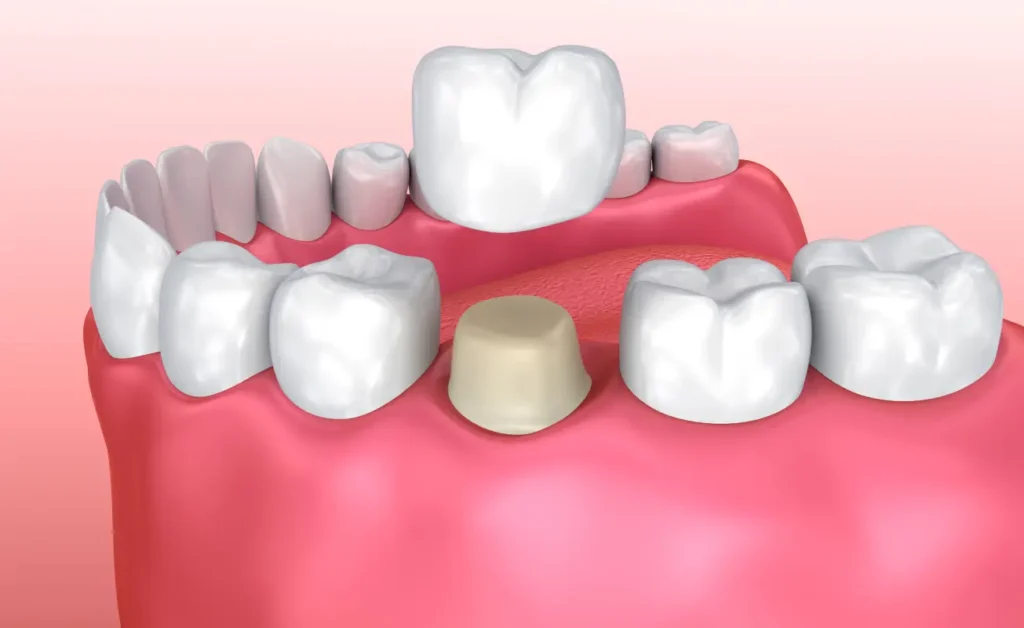
The main goal of restorative care is to repair or replace damaged or missing teeth. It helps restore the mouth’s function, structure, and aesthetic appearance.
Common restorative dentistry procedures include the following:
Dental Crowns
A dental crown is a custom-fitted cap that covers the entire visible portion of a tooth above the gum line.
Crowns are used in restorative dentistry to strengthen a tooth that has a large filling, protect a weak tooth from breaking, or restore a tooth that is already broken.
They are also used to cover dental implants or to retain a dental bridge.
Crowns can be made from various materials, including porcelain, ceramic, or metal alloys, chosen based on the tooth’s location and the patient’s functional needs.
Dental Bridges
For patients missing one or more consecutive teeth, a dental bridge fills the gap.
It spans the space where the teeth are missing and is anchored to the natural teeth or implants on either side of the gap.
These anchoring teeth, called abutments, support the false tooth or teeth, known as pontics, placed between them.
Bridges are critical not only for restoring the appearance of the smile but also for preventing the remaining natural teeth from shifting out of position due to the missing tooth.
Removable Dentures
Dentures are removable replacements for missing teeth and the surrounding tissues.
There are two main types of dentures: complete and partial.
- Complete dentures are used when all the teeth are missing in the upper, lower, or both jaws.
- Partial dentures are used when some natural teeth remain and serve as anchors for the prosthetic.
Dentures are designed to fit comfortably and look natural, allowing patients to chew and speak more effectively after losing their natural teeth.
Dental Implants
Dental implants are a commonly used long-term option for replacing missing teeth in suitable cases.
An implant is a small post, usually made of titanium, that is surgically placed into the jawbone beneath the gums.
Over time, the implant fuses with the bone in a process called osseointegration, providing a stable base for a replacement tooth, such as a crown or bridge. Because they replace both the root and the crown of a tooth, implants help preserve the jawbone and prevent the bone loss that typically follows tooth extraction.
Orthodontics
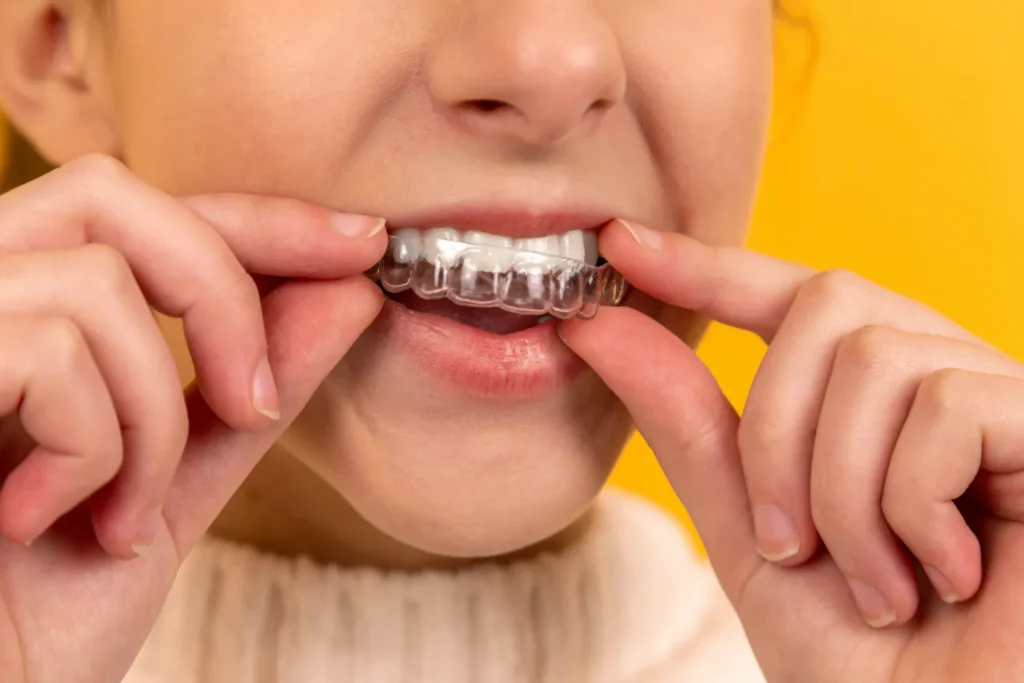
Orthodontics focuses on correcting misaligned teeth and bite issues to improve oral function and dental alignment. In some cases, treatment may also influence overall facial appearance.
Because misaligned teeth can be more difficult to clean, they may increase the risk of tooth decay and gum disease. This is one reason orthodontic care can support long-term oral health.
Common orthodontic treatments include:
Fixed (Metal) Braces
Traditional metal braces are a well-established method for correcting many orthodontic issues.
They consist of stainless steel brackets attached to each tooth and connected by thin wires, which apply controlled pressure to guide tooth movement over time.
These wires are adjusted periodically by the orthodontist throughout treatment to help achieve improved alignment and a healthier bite.
Clear Aligners (Invisalign)
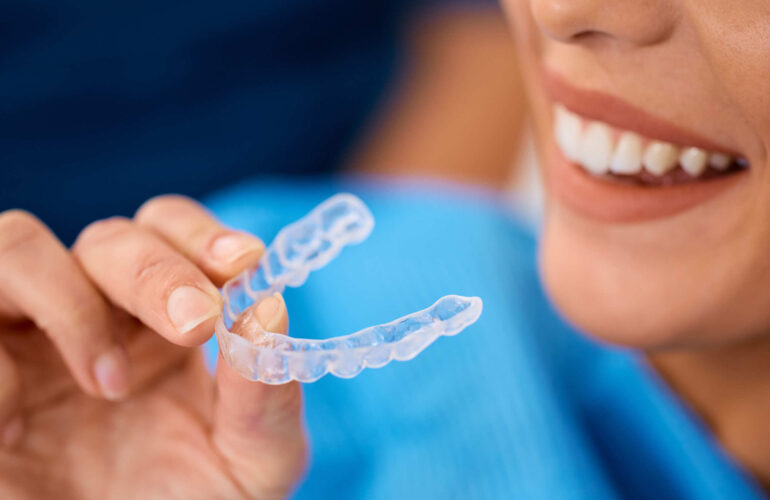
Invisalign is a system that uses a series of clear, removable aligners to gradually straighten teeth.
These aligners are custom-made for each patient using computer imaging. Patients wear each set of aligners for about one to two weeks before moving on to the next set in the series, gradually shifting the teeth into place.
The primary advantage of Invisalign is that the aligners are virtually invisible and can be removed for eating, brushing, and flossing.
Palatal Expanders
A palatal expander is an orthodontic device used to widen the upper jaw so that the upper and lower teeth fit together better.
This device is often used in children and adolescents whose jawbones are still growing.
The expander is custom-fit to the upper molars and applies gentle pressure to the two halves of the upper jawbone, causing them to separate and allow new bone to grow in between.
This creates more space for erupting adult teeth and can correct issues like crossbites.
Paediatric Dentistry

Paediatric dentistry is dedicated to the oral health of children from infancy through adolescence.
Children have unique dental needs that differ from those of adults. Primary teeth, also known as milk teeth, serve as placeholders for permanent teeth and are essential for proper chewing and speech development.
Proper paediatric dentistry involves fostering a positive, comfortable environment that helps reduce dental anxiety for years to come.
Explore Dental Care Options at Elements Dental!
There is a wide range of dental procedures available, from root canal treatment to teeth whitening. These services can address different oral health concerns, including discomfort, functional problems, and aesthetic issues.
Regular dental visits and timely treatment can help support the long-term health of your teeth and gums. Depending on your needs, your dentist may recommend preventive, restorative, aesthetic, or specialised treatment.
If you have concerns about your oral health or would like to understand your treatment options, a dentist can advise you on the next appropriate steps. At Elements Dental, we’ll work with you to support the function and health of your teeth.
Frequently Asked Questions
How often should I schedule a dental visit?
Most dental practitioners recommend coming in every six months for routine check-ups and cleanings. However, if you have a history of gum disease or are at higher risk of tooth decay, your clinician might suggest more frequent visits to better monitor your oral health.
Are routine dental X-rays safe for patients?
Yes. Dental X-rays use low radiation doses to capture detailed images of your teeth and jawbone. Clinics apply appropriate radiation protection measures in accordance with current standards, the type of imaging required, and clinical need.
How long does the entire process for getting a dental implant usually take?
The entire timeline can span anywhere from three to nine months from start to finish. This is because the jawbone requires several months to fuse securely with the titanium post before the final crown can be manufactured and attached.
What is the typical lifespan of porcelain dental veneers?
With good oral hygiene and routine dental check-ups, porcelain veneers typically last between 10 and 15 years. You can extend their lifespan by avoiding habits that put excessive pressure on them, such as biting your nails or chewing on ice.
Why do my gums sometimes bleed when I floss at home?
Bleeding gums are often associated with gingivitis, which is inflammation caused by plaque buildup along the gum line. Gentle daily flossing and good oral hygiene may help, but persistent or recurrent bleeding should be assessed by a dentist to identify the cause and recommend appropriate treatment.