
Dental

Why Does My Tooth Hurt? 10 Types of Tooth Pain & What They Mean

Key Takeaways

  • Tooth pain can be odontogenic (originating directly from tooth issues like cavities, sensitivity, pulpitis, or abscesses) or non-odontogenic (referred pain from nearby structures like the sinuses, jaw joints, or muscles).
  • Conditions affecting the inner tooth pulp or surrounding bone tissue, such as irreversible pulpitis and dental abscesses, cause lingering or throbbing pain that may require root canal treatment or other urgent dental care, depending on the severity.
  • Gum soreness and bleeding are primary indicators of gum disease, which ranges from reversible gingivitis to advanced periodontitis that may require scaling and root planing.
  • Discomfort located outside the teeth themselves can stem from sinus pressure, wisdom tooth impaction, or temporomandibular joint disorders (TMJD).
  • Dentists accurately pinpoint the root cause of oral discomfort by thoroughly analysing five specific diagnostic factors: pain intensity, chronology, character and quality, localisation, and triggers.

Tooth pain can disrupt your day and distract you, whether you’re at work, in class, or trying to relax in the evening.

Different presentations of pain point to different underlying causes. Some come directly from the tooth itself, such as cavities, infection, or gum disease. Others are referred pains, discomfort that feels like a toothache but actually originates from nearby structures such as the jaw joint, jaw muscles, or sinuses.

In this guide, we’ll walk through the 10 most common types of tooth pain we see at Elements Dental, grouped by their true source. For each, we’ll explain the typical sensation, what it usually signals, and how a dentist for a toothache would approach diagnosis and treatment.

Pain that comes from the tooth itself (Odontogenic)

1. Cavity Pain

Chronology: Temporary and resolves quickly

Character and Quality: A sudden, sharp pinch

Localisation: The specific tooth with the cavity, usually on the chewing surface

Triggers: Whenever you bite down on food

You might notice a sudden, sharp pinch when you bite down on food, or a brief flash of discomfort when consuming sweet foods or drinks. This sensation is usually temporary and resolves quickly once the trigger is removed, but it tends to return whenever you chew with that side of your mouth.

This type of discomfort typically indicates a cavity, which forms when oral bacteria produce acids that erode your protective tooth enamel.

Once the outer layer is compromised, the softer dentine layer underneath becomes exposed to temperature and food particles, leading to brief nerve irritation.

When you visit us for a toothache assessment, we examine the area to check the extent of the decay. We remove the compromised enamel and seal the tooth using a tooth-coloured composite filling. This treatment protects the inner pathways and prevents bacteria from advancing. The seal protects the inner dentine and pulp from further irritation, relieving your cavity pain.

2. Sensitivity

A lady experiencing sensitivity from a popsicle ice cream, requiring a dentist for toothache

Chronology: Arrives instantly and fades within seconds

Character and Quality: Sharp and sudden

Localisation: Areas with thin enamel or exposed root surfaces.

Triggers: Cold air, cold or hot drinks, sweet and/or sour foods, tooth-brushing.

This manifests as a sharp, sudden twinge that occurs when your teeth are exposed to cold air or ice water. You’ll feel this momentarily twinge across your face. The discomfort arrives and fades after the irritant leaves your mouth.

Sensitivity occurs when your protective enamel thins or your gums recede, exposing the dentin beneath. The dentin contains tubules that lead directly to the tooth nerve. As such, the cold stimulates the nerve pathways, causing them to register discomfort.

We’ll evaluate your mouth to identify areas of recession or enamel wear. We can apply desensitising agents or protective fluoride varnishes to seal the open tubules. If the root exposure is substantial, we may apply a composite resin layer to cover the surface and protect it from daily triggers.

We may also recommend a desensitising toothpaste containing potassium nitrate or stannous fluoride.

3. Dull Lingering Ache (Pulpitis)

Chronology: Continuous; persists for minutes to hours and sometimes worsens at night

Character and Quality: Dull, heavy, and deep-seated

Localisation: Difficult to pinpoint to a single tooth; you may feel it across one side of your jaw, ear, or temple area.

Triggers: Lying down, bending forward, heat, or sometimes no trigger at all (spontaneous pain)

If you feel a dull pain across your jaw that’s difficult to localise and triggers spontaneously without specific stimuli, a possible cause could be pulpitis.

Pulpitis is inflammation of the inner tissue of your tooth, the pulp, which contains the nerves and blood vessels that keep your tooth alive. It develops in two forms:

  • Reversible pulpitis: the early, mild stage. Pain is sharp but fades within seconds of removing the trigger (such as cold or sweet foods). At this stage, treating the underlying cause, often with a tooth-coloured filling, is usually enough to settle the tooth down.
  • Irreversible pulpitis: the more advanced stage, which is what the symptoms in this section describe. The pain lingers long after the trigger is gone, arrives spontaneously, and tends to worsen when you lie down or bend forward. At this point, the inflamed pulp cannot heal on its own and requires more definitive treatment.

Unlike a fleeting twinge, this sensation is a continuous, heavy ache that remains after you have finished eating or drinking. It can persist for minutes or hours and can become more noticeable at night, when you settle down to rest.

Also, because the pulp contains blood vessels and nerves, patients with pulpitis find the pain difficult to localise. You may know which side of your mouth is affected, but struggle to identify the exact tooth.

The pulp chamber is enclosed within hard tooth walls, so when the tissue inside swells, pressure builds up with nowhere to release, which is why the discomfort can feel disproportionate to what’s visible on the outside of the tooth.

Pulpitis is treated with an endodontic procedure known as root canal therapy.

At Elements Dental, we perform root canal therapy to remove the inflamed pulp, then clean, shape, disinfect, and fill the canal system to eliminate the source of pain and prevent reinfection. We finish by restoring the tooth, usually with a crown, to protect it from fracture and restore its full function. Pulpitis cases will differ from patient to patient, however, so each one may require a different approach.

4. Throbbing with Swelling (Dental Abscess)

A lady in her bed experiencing throbbing with swelling radiating to her ear and neck, requiring a dentist for toothache

Chronology: Persistent and pulses in time with your heartbeat

Character and Quality: Throbbing

Localisation: Spreads across your jawbone, ear, and cheek.

Triggers: Biting or chewing on the tooth, lying flat, or applying heat.

This is an intense and rhythmic pulsing pain that beats in time with your pulse. The discomfort does not stay confined to a single spot; it frequently radiates across your jawbone and into your ear, accompanied by visible swelling in your gums or cheek.

Seek emergency care: If facial swelling extends to other parts of the face, such as the eye, neck, or the floor of the mouth, and causes other complications such as difficulty swallowing and breathing, or if you’re experiencing a fever. Don’t wait until a dental appointment to get a look. Go to a hospital A&E immediately.

A throbbing sensation, coupled with swelling, is a primary sign of a dental abscess. This occurs when a bacterial infection spreads beyond the root tip into the surrounding bone and soft tissues, leading to fluid accumulation and pressure. 

We resolve the issue via root canal treatment,drainage or extraction. We may prescribe a course of antibiotics if the infection has spread beyond the tooth, but they are not a substitute for definitive treatment (drainage, root canal therapy, or extraction).

5. Gum Pain and Soreness

Chronology: Persistent and ongoing throughout the day

Character and Quality: Tender, sore, sometimes throbbing

Localisation: Generalised across the gumline.

Triggers: Brushing, flossing, or touching your gums.

If you feel a persistent soreness across your gums—perhaps your gums may feel tender to the touch and bleed easily during your regular brushing or flossing—you’re likely dealing with gum disease.

Gum disease is inflammation of the tissues surrounding your teeth.

It develops in stages:

  • Gingivitis: the early, reversible stage. Your gums become red and swollen, and they bleed when brushing or flossing (Note that brushing or flossing for the first time in a while can also cause gum bleeding without you necessarily having gingivitis). With proper cleaning and improved home care, gums can return to full health.
  • Periodontitis: the more advanced stage, where inflammation extends deeper and damages the bone and ligaments supporting your teeth. While we can halt its progression, the bone loss already sustained cannot be reversed.

Both stages develop when bacterial plaque accumulates along and below the gumline. As the bacteria multiply, your body’s immune response causes the inflammation you experience as tenderness and bleeding.

At Elements Dental, the treatment depends on the stage we identify during your examination.

For gingivitis, a thorough scaling and polishing is usually sufficient. We remove plaque and hardened tartar that home brushing cannot reach.

For periodontitis, we perform scaling and root planing, a deeper cleaning beneath the gumline that removes plaque and calculus from the tooth root surfaces. This allows the surrounding tissues to reattach and heal. Depending on the severity, this may be carried out over multiple visits, and in advanced cases, we will discuss whether a referral to a periodontist (a gum specialist) is appropriate.

Regular dental check-ups, typically every three to six months for patients with a history of gum disease, help us catch any early signs of recurrence before they progress. 

6. Third Molar (Wisdom Tooth) Pain
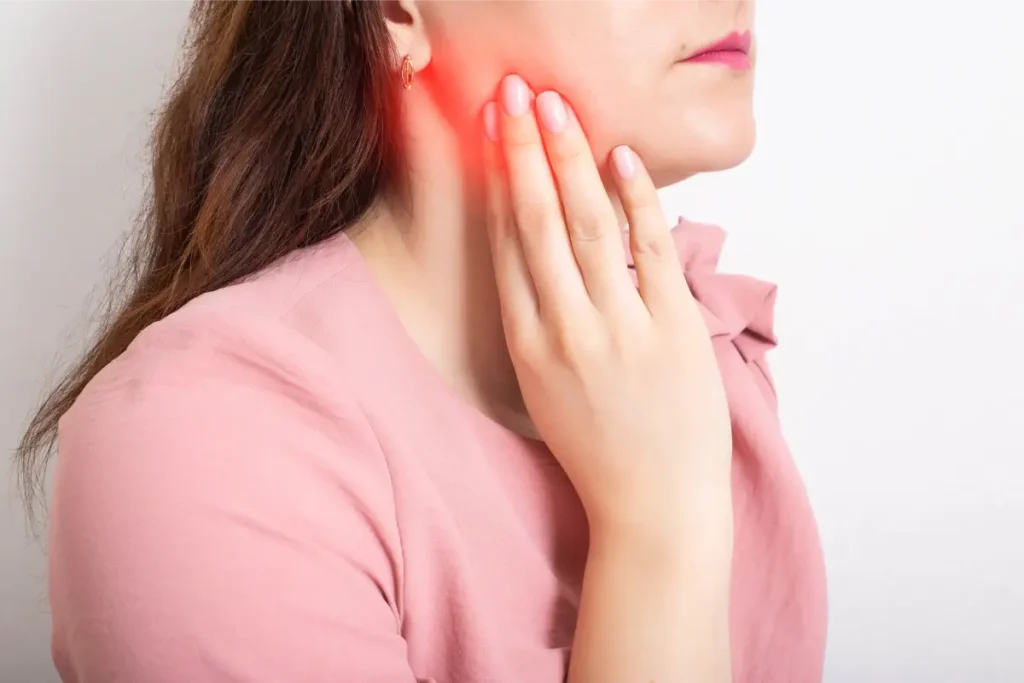
A woman experiencing third molar pain, necessitating wisdom tooth removal from a dentist for toothache

Chronology: Persistent and ongoing until medically addressed

Character and Quality: Dull and throbbing

Localisation: The very back of your mouth, behind your second molars.

Triggers: When chewing, brushing the area, or spontaneously without trigger.

This feels like a persistent pressure or throbbing at the very back of your mouth, behind your second molars. It can make chewing difficult and may cause stiffness that limits how wide you can comfortably open your jaw.

This discomfort is caused by your third molars, commonly known as wisdom teeth.

When there is insufficient space in your jaw, these teeth can become impacted, failing to erupt completely. This can cause inflammation in the surrounding gum tissue, known as pericoronitis. This results in food and bacteria becoming trapped beneath the flap formed by the partially erupted tooth, which contributes to increased inflammation and discomfort.

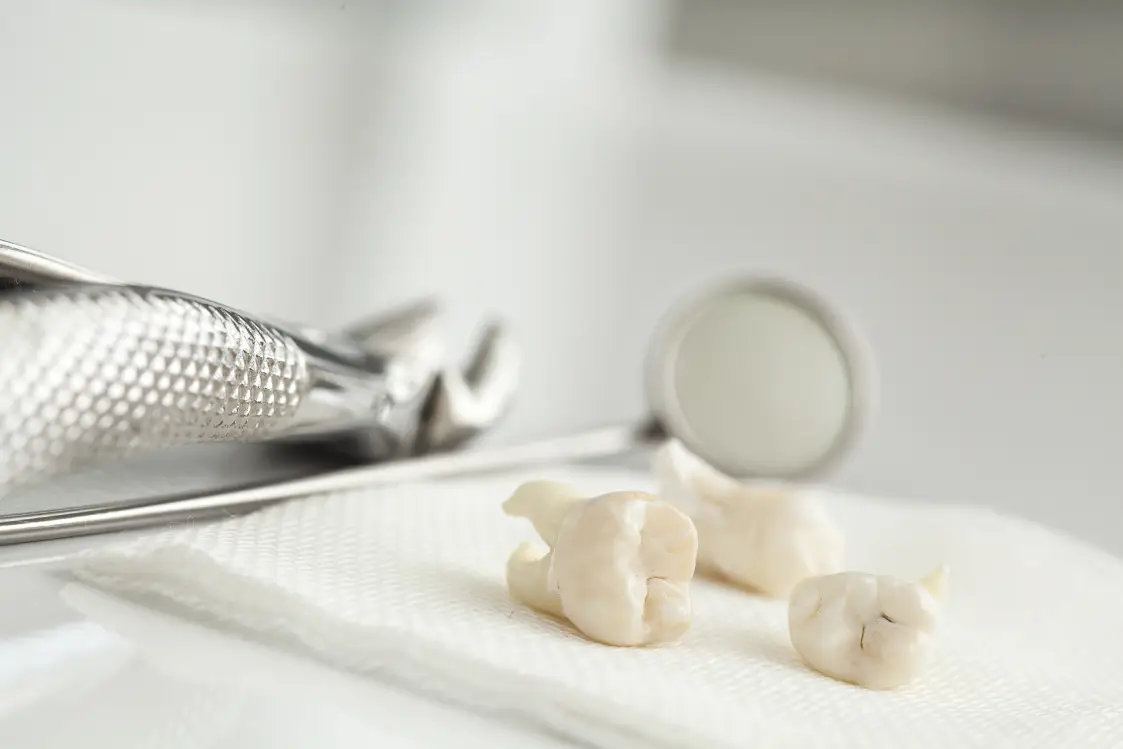
Wisdom teeth can also cause discomfort, even if they haven’t erupted at all. As the third molars try to erupt through the gums, they might instead press against the second molars, resulting in pain and difficulty focusing for the patient.

We’ll take an X-ray to assess the orientation of the wisdom tooth. We will clean the inflamed gum tissue and discuss whether a routine extraction or a surgical wisdom tooth removal is necessary. For eligible surgical wisdom tooth cases, Medisave may be claimable, subject to prevailing guidelines and clinical assessment 

Pain that feels like a toothache but comes from elsewhere (Non-Odontogenic / Referred)

The following conditions are not true toothaches; they are pains that originate outside the tooth but can be mistaken for a toothache. Their effects on a patient’s day-to-day can be as disruptive as a toothache, causing them to lose focus and to have difficulty eating, lying down, and performing certain physical activities.

Part of our role at Elements Dental is to make this distinction during diagnosis.

7. Aching in Upper Teeth (Sinus-Related)

Chronology: Continuous and worsens with sudden head movements

Character and Quality: Dull and heavy

Localisation: Upper molars

Triggers: Bending forward, lying down, or during a cold/sinus infection

This presents as a dull, heavy discomfort that affects several of your upper back molars rather than a single tooth. You might notice that the ache worsens when you walk or move your head suddenly.

Although the pain feels like a toothache, it is actually a form of referred pain; the discomfort originates from the maxillary sinuses above your upper teeth, not from the teeth themselves. The roots of your upper back teeth, particularly the second premolar through second molar, sit very close to the floor of the maxillary sinuses.

Any pressure buildup within the sinus cavities directly compresses the dental nerves, creating tooth-like pain.

We’ll examine the upper molars and run vitality tests to confirm the teeth are healthy. If no dental cause is found, we will discuss the likelihood of a sinus-related cause and may recommend you see your GP or an ENT specialist.

8. TMJ Pain
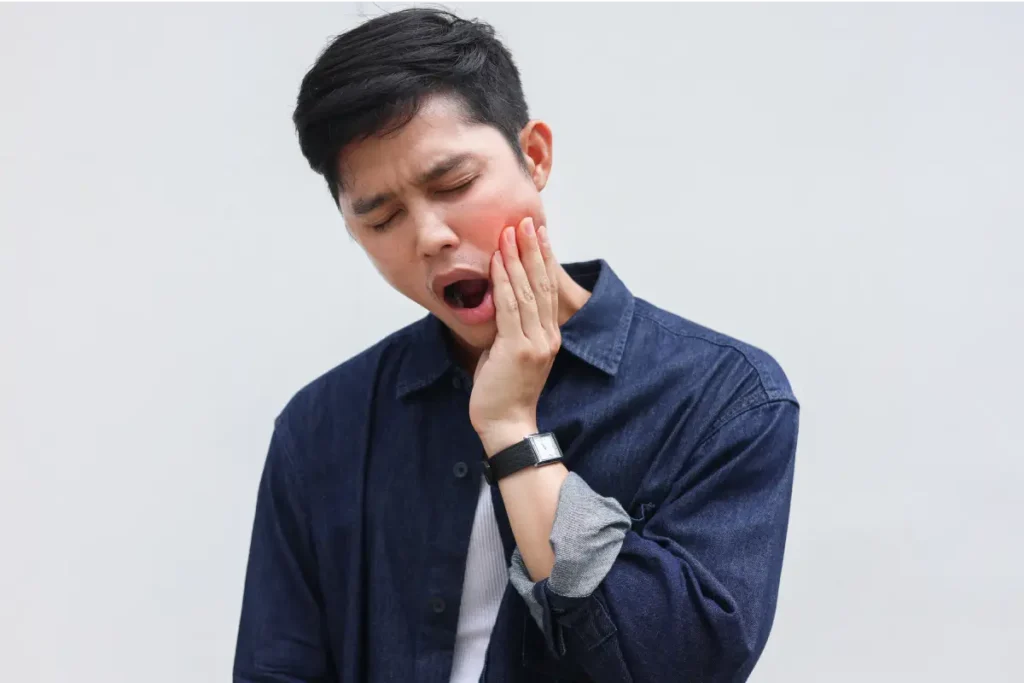
A man experiencing TMJ pain when he opens his mouth, requiring a dentist for toothache

Chronology: Regular and persistent during jaw movement

Character and Quality: Dull

Localisation: In front of your ear, radiating into your lower jaw or cheek.

Triggers: Opening your mouth.

Although temporomandibular joint (TMJ) pain is not a true toothache, it is one of the most common conditions mistaken for one. Patients usually arrive convinced that a back tooth is the problem when, in fact, the pain is coming from the jaw joint or surrounding muscles.

This feels like a dull, aching discomfort centred just in front of your ear, radiating downward into your lower jaw or cheek. You can notice clicking or popping sounds when you open your mouth to talk or eat.

This pain stems from temporomandibular joint dysfunction (TMD). It’s an umbrella term for various mechanical issues your TMJ can experience when you open and close your mouth. It can be caused by jaw clenching or grinding, muscle overuse, stress, trauma, and joint disc problems.

We’ll evaluate your jaw movement and assess your bite alignment. Sometimes, we provide a custom-made splint or night guard to reduce strain on the joints.

We also use a deprogrammer, an appliance that breaks your jaw’s habit of finding the optimal occlusion. This “deprograms” the jaw from that habit so we can find your jaw’s true, relaxed neutral position. With this device, we can determine whether your jaw pain is due to muscle strain or a structural issue with the joint.

In selected cases, we may consider minor occlusal adjustments through orthodontics, but only after conservative treatments such as splint therapy and jaw exercises have been tried.

9. Bruxism-Related Pain

A woman experiencing temple pain as she wakes up, requiring a dentist for toothache

Chronology: Upon waking in the morning

Character and Quality: Sharp (teeth) and dull (temples)

Localisation: Across multiple teeth (sharp) and at the temples (dull)

Triggers: Sleep, periods of stress, or concentration.

You will typically notice this as a broad, generalised ache across multiple teeth or a tired feeling in your jaw muscles when you wake up in the morning. It can also cause a dull morning headache centred around your temples.

This discomfort is caused by muscle fatigue, tooth wear, and microtrauma resulting from the habitual grinding or clenching of teeth. This happens unconsciously while you sleep, or during periods of elevated stress throughout the day. This habitual grinding is known as bruxism.

Bruxism-related pain is not a true toothache. The pain comes from overworked jaw muscles and worn tooth surfaces, not from inside the teeth themselves.

Bruxism can be categorised into two types:

  • Sleep bruxism (SB): unconscious grinding during sleep
  • Awake bruxism (AB): typically clenching during the day, often stress-related

We’ll check your enamel for wear facets and micro-fractures. To treat this, we create a custom night guard that you wear during sleep. This appliance absorbs the forces of clenching and protects your teeth from physical damage.

For awake bruxism, we discuss habit-awareness techniques and stress management to help address unconscious grinding through the day. We can also create daytime splints that you can wear with minimal disruption to your daily life, allowing you to still talk and work. In some cases, it could be due to general wear and tear of your teeth, cracked teeth or severely worn-down teeth from acid erosion. This may require full-mouth rehabilitation to restore the lost vertical dimension, prevent tooth fractures, and rebuild your bite. 

10. Mechanical Orthodontic Pain (Braces & Clear Aligners)

Chronology: Following dental adjustments

Character and Quality: Dull / A generalised tightness

Localisation: Areas of tooth movement

Triggers: Recent orthodontic adjustments, new aligner trays, or biting on firm foods during treatment.

Unlike a typical toothache, this discomfort is not caused by disease in the tooth, it’s the natural response of your body to teeth being actively moved. It feels like a generalised tightness or aching pressure across your entire dental arch, not localised to a single tooth, and typically feels like a bruise when you bite into food.

This pain is mechanical and occurs after your regular orthodontic adjustments or when you progress to a new set of clear aligners.

The continuous forces applied to move your teeth temporarily compress the surrounding periodontal ligament, triggering a natural inflammatory response. This is part of how teeth biologically reposition, but it’s also why you feel discomfort for a few days after each adjustment.

The pain will be localised in areas that require the most movement. If your canines are out of position, then you’ll notice that they will ache more than your other teeth, as your braces or aligners work to get them into position.

At Elements Dental, we review your treatment progress to ensure the forces moving your teeth are safe and within comfortable ranges. Orthodontic discomfort typically subsides within three to seven days after each adjustment, and most patients find it less noticeable and intrusive as the body adapts.

How a Dentist for Toothache Diagnoses the Source of Your Pain
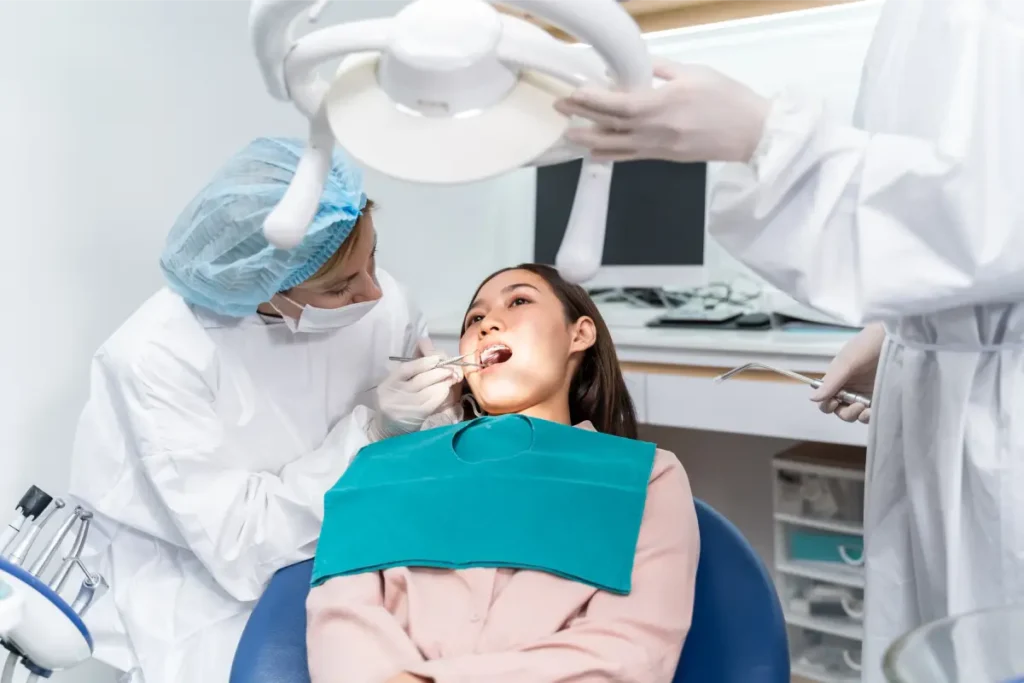
A woman undergoing a dental consultation from a dentist for toothache

Tooth pain is rarely random; every detail you describe helps us narrow down the cause.

At Elements Dental, we typically assess pain through four key factors:

Intensity

We also consider how mild, moderate, or severe the discomfort feels to you, as this can help us understand how advanced the underlying issue may be.

Normally, patients come to us only when their tooth pain becomes unbearable and interferes with their day-to-day life. We highly suggest going in for an appointment while the pain is still manageable, as this can help us diagnose the pain’s source and prevent it from worsening.

Chronology

We will ask you exactly when the pain first started and how long each episode lasts.

For instance, pain that flares up momentarily and disappears is different from an ache that remains for hours.

Character and Quality

The precise sensation you experience provides us with more insight into the underlying causes of your toothache.

Different types of tooth pain can fall into each of the following categories:

  • Sharp or Lancinating: A sudden, piercing, and intense flash of pain. It feels like an immediate electric shock, sting, or sharp pinch that hits rapidly, cuts through the area instantly, then fades.
  • Dull or Throbbing: A heavy, deep, and rhythmic discomfort that pulses steadily in sync with your heartbeat. It behaves like a constant, pounding ache, creating a heavy sensation of fullness or internal pressure.
  • Inflammatory or Pressure-Driven: A continuous, gnawing ache that intensifies dramatically upon direct contact, tapping, or changes in head position. It feels like a tense, bruised soreness inside the bone that magnifies when any weight or pressure is applied to the area.

Localisation

Localisation refers to your ability to pinpoint the exact tooth causing your discomfort. This is one of the more straightforward ways we determine where the underlying issue stems from. Pain emanating from the back indicates a likely impacted wisdom tooth.

When a pain pathway is well-localised, you can easily tap or point to the problematic tooth.

However, if the discomfort is diffuse and you feel a generalised ache across your whole jaw, the inflammation is likely confined to the pulp chamber, where blood vessels and nerves have been affected. This makes clinical tests such as percussion and palpation essential to identify the correct site.

Triggers

Identifying what initiates or worsens your toothache helps us understand what’s happening inside the tooth.

We will ask if the pain responds to cold air, hot liquids, sweet foods, or direct biting pressure.

We also look at whether the discomfort occurs spontaneously, without any trigger.

By mapping these environmental and physical triggers, we can accurately diagnose your condition.

Book a Consultation with a Dentist for a Toothache at Elements Dental!

At Elements Dental in Bukit Timah, we focus on accurately identifying the cause of your tooth pain so we can recommend appropriate treatment based on your condition.

If your symptoms persist or worsen, see a dentist for a toothache at Elements Dental for an assessment.
Dental

TMJ Symptoms, Overbite, & Crowding: How Orthodontics in Singapore Addresses Bite Issues and Jaw Pain

Many people assume that orthodontic care is purely an aesthetic pursuit designed to straighten crooked teeth and modify the frontal profile of your smile.

However, orthodontics goes beyond just aesthetics. It primarily focuses on the overall function of your mouth. The way your upper and lower teeth meet affects your entire chewing system. The way your teeth come into contact also determines how your jaw moves to bring your upper and lower arches together. As such, if you are experiencing jaw discomfort, one likely culprit could be an improper bite.

A straighter smile is just one of the outcomes of this bite correction. Choosing orthodontics in Singapore means addressing how your teeth work together, not just how they look.

Common Bite Issues Orthodontic Treatment Can Address

Malocclusion is the clinical term for an improper bite layout.

When your teeth do not line up correctly, the condition can fall into several distinct categories:

Crowding (Class 1 Malocclusion)

A Class 1 alignment means that your overall jaw relationship is correct. Your upper and lower jaws meet exactly where they should when you close your mouth. However, you still experience bite issues because your teeth are crowded, overlapping, crooked, or rotated within the dental arch.

This occurs when your jaw lacks the physical space to accommodate all your adult teeth naturally. You might notice that certain teeth twist sideways or get pushed entirely out of alignment.

Crowding makes maintaining oral hygiene difficult, as plaque accumulates easily in the overlapping spaces where toothbrushes and dental floss cannot easily reach. Over time, this plaque retention can increase the risk of tooth decay.

Overbite (Class 2 Bite Patterns)

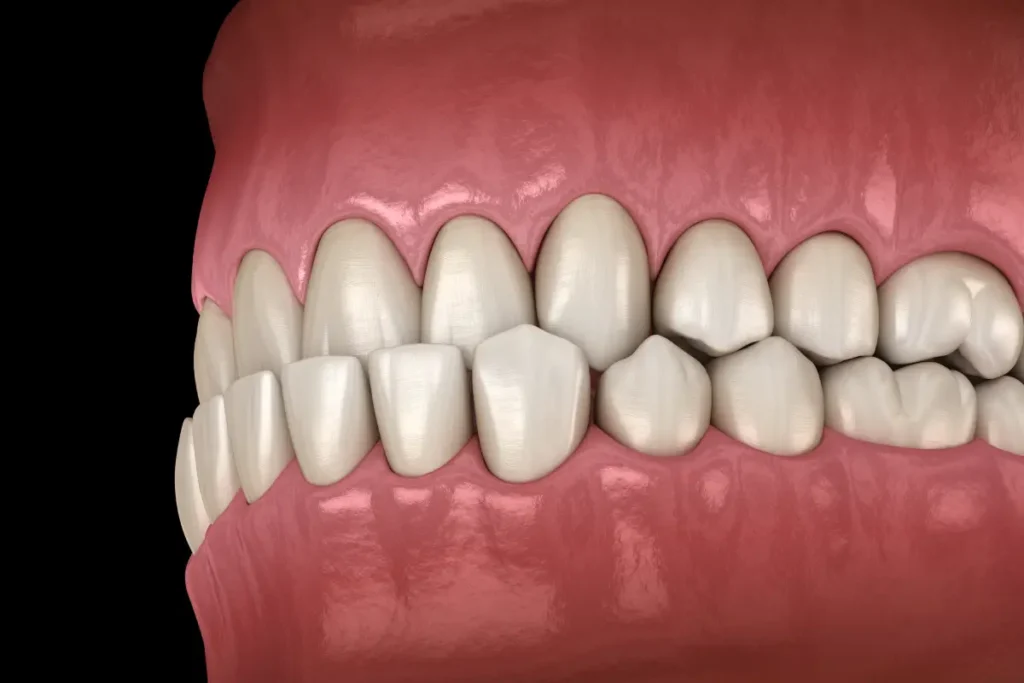
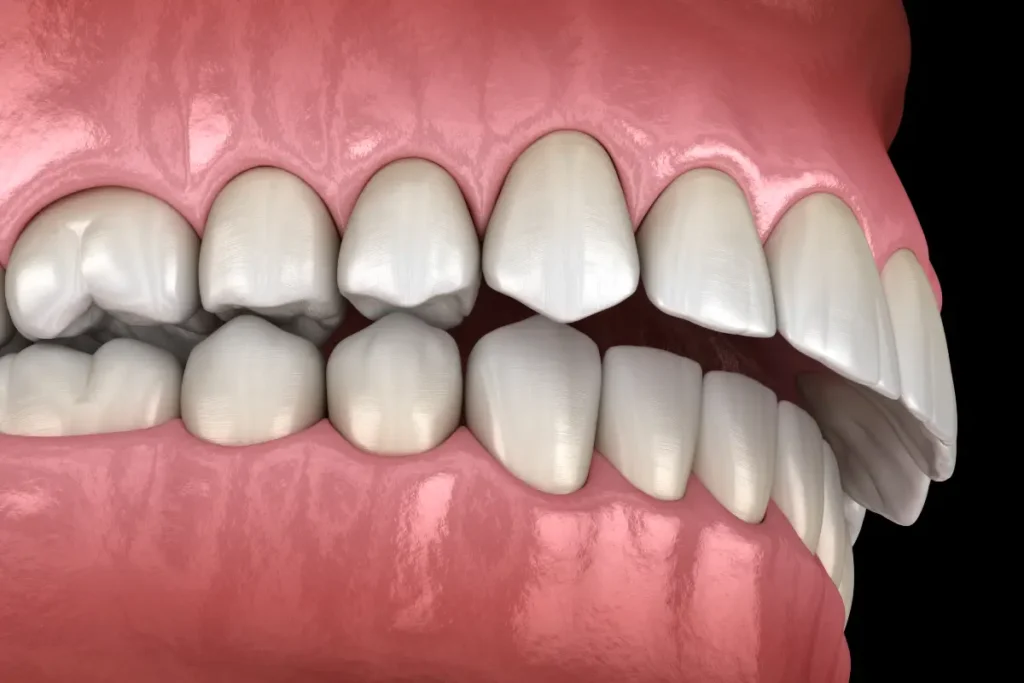
 Illustration of a Class II malocclusion showing increased overjet between upper and lower front teeth needing an orthodontist.

A Class 2 malocclusion occurs when your jaw projects ahead of your lower jaw. This position creates a noticeable horizontal overlap between the front teeth. People often refer to this layout as protruding front teeth or buck teeth.

There are two terms you’ll hear from your dentist when you have a Class 2 bite pattern:

  • Overjet: The overjet is the distance the upper teeth protrude forward in front of the lower teeth. Think of it like a balcony sticking out from a building.
  • Overbite: An overbite, on the other hand, is how much the upper teeth cover the lower teeth vertically when you bite down. Much like window blinds being pulled down.

This alignment frequently stems from developmental factors, such as a smaller lower jaw relative to your upper jaw.

Because the upper front teeth protrude, they are more vulnerable to being chipped during sports, falls, or accidents.

A Deep Bite is a particular type of Class 2 misalignment where the vertical overlap is highly pronounced. When you close your mouth, your upper front teeth cover your lower front teeth completely, hiding them from view.

In some cases, your lower front teeth can press directly into the gum tissue behind your upper teeth when you bite down.

Other Bite Patterns: Underbite, Open Bite, and Crossbite

An underbite is a class 3 malocclusion requiring orthodontics in Singapore

Crowding and overbite are among the more common bite issues we address at our practice. However, we occasionally come across the following as well:

  • Underbite:

    A Class 3 malocclusion represents the opposite pattern of an overbite. In this scenario, your lower jaw and lower teeth protrude forward, sitting entirely in front of your upper front teeth when your mouth is closed. This configuration is often hereditary and involves the actual position of your jawbones rather than just the alignment of individual teeth.

  • Open Bite:

    An open bite occurs when your back teeth touch completely, but your front teeth fail to meet. This gap can make it challenging to bite through food because your front teeth cannot physically touch each other to cut it.

  • Cross Bite:

    A crossbite occurs when your teeth misalign laterally from side to side. Certain upper teeth tuck completely inside your lower teeth when you close your mouth. To compensate for this uneven lateral contact, you may unconsciously shift your lower jaw to one side when chewing. This places asymmetric pressure on your joints and uneven enamel wear on your teeth.

How Improper Occlusion Can Affect Oral Function and Comfort

Your chewing system relies on even pressure distribution to function comfortably. An improper occlusion can introduce uneven mechanical stress to your mouth, which may result in any of the following:

Jaw Joint and Muscle Symptoms

Your temporomandibular joints connect your lower jawbone to your skull, acting as sliding hinges that allow you to open your mouth, speak, swallow, and chew.

An improper bite makes these joints compensate for the malocclusion—working outside their intended alignment.

This can result in familiar issues, such as popping and clicking when you open your jaw, muscle tension, and jaw fatigue, which can lead to chewing discomfort.

This continuous muscular exertion can lead to temporomandibular joint disorders, commonly known as TMJD, in which you experience jaw locking and a host of other jaw-related issues.

Uneven Tooth Wear and Damage to Tooth Structure

An uneven bite means that certain teeth bear more amount of force than the others every time you eat or clench your jaw.

This can result in localised sensitivity in specific areas, as the enamel there has worn down faster, exposing the dentin.

An ideal bite results in an even distribution of bite forces, preventing any specific area from wearing down more quickly.

Chewing Difficulty and Uneven Bite Pressure

Malocclusions, such as open bites or underbites, prevent your teeth from making the necessary contact to grind or slice food efficiently. To compensate, you might find yourself chewing for longer periods, favouring one side of your mouth, or avoiding harder foods entirely.

How Orthodontics in Singapore Helps Correct Bite Problems

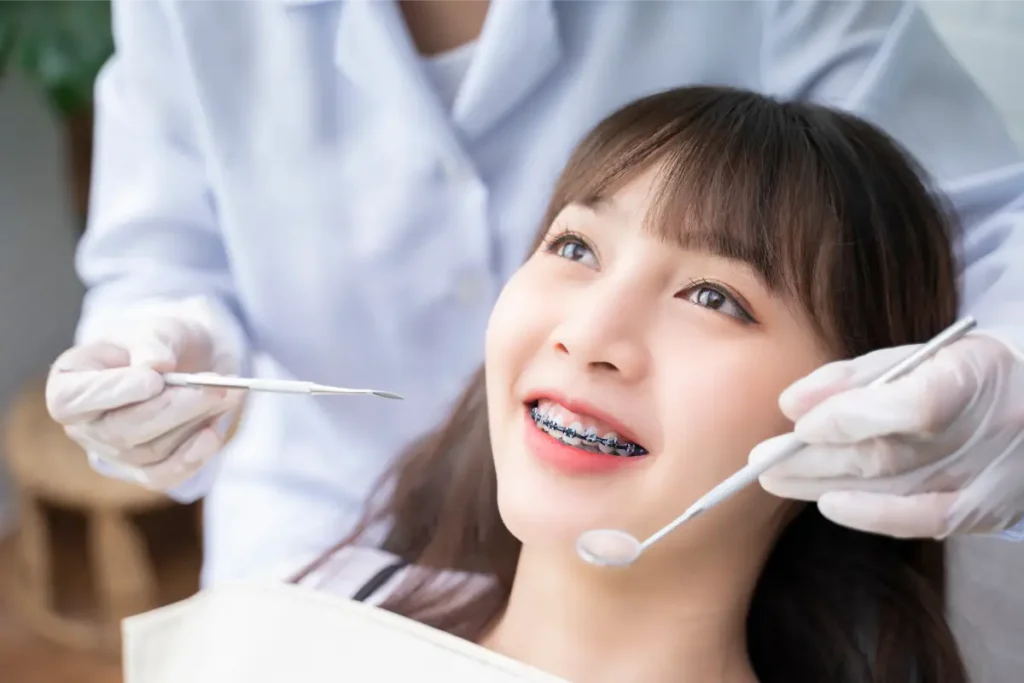
A young, Asian lady at the dentist getting orthodontics in Singapore

Orthodontics in Singapore focuses on harmonising your dental arches, jawbones, facial muscles, and supporting ligaments.

By applying continuous, controlled forces, orthodontic care aims to guide your teeth into positions that distribute biting pressure evenly across your entire mouth.

Here’s how orthodontics helps reduce contributing bite factors associated with jaw discomfort in some patients.

Moving Teeth into Better Alignment

The primary mechanism of orthodontic treatment involves moving individual teeth within the jawbone.

When an appliance applies pressure to a tooth, it initiates a cellular response in the surrounding bone tissue.

The bone in front of the moving tooth experiences compression, causing cells to clear away tiny amounts of bone material. Meanwhile, new bone tissue deposits in the space left behind the tooth.

This continuous process allows your teeth to migrate through the jaw into a more aligned configuration.

Improving How the Upper and Lower Arches Meet

When your bite issue stems from a mismatch between your upper and lower jaws, such as an overbite or an underbite, treatment is beyond individual tooth alignment.

Orthodontics addresses the front-to-back relationship between your dental arches by altering how they close together.

For growing patients, certain appliances may help guide jaw development as part of bite correction.

For adult patients whose jaw growth has ceased, orthodontists use carefully directed forces to move the upper teeth backwards while shifting the lower teeth forward, or vice versa.

This spatial modification helps your upper and lower teeth meet in a functional position.

Creating Space and Correcting Width Imbalances

A crossbite occurs when your upper dental arch is too narrow relative to your lower arch. This mismatch prevents your back teeth from interlocking properly, causing your jaw to slide sideways to find a resting position.

Orthodontic interventions can address this width discrepancy by physically widening the upper arch.

In younger patients, this involves expanding the palate before the bone halves fuse completely.

In adults, it involves tipping the upper molars outward to achieve proper coordination with the lower teeth.

Widening the arch eliminates the lateral jaw shift, allowing you to open and close your mouth properly.

Treatment Options That May Be Used to Correct Bite Issues

To guide your teeth and jaws into a functional position, orthodontists utilise a variety of specialised apparatuses. These tools include:

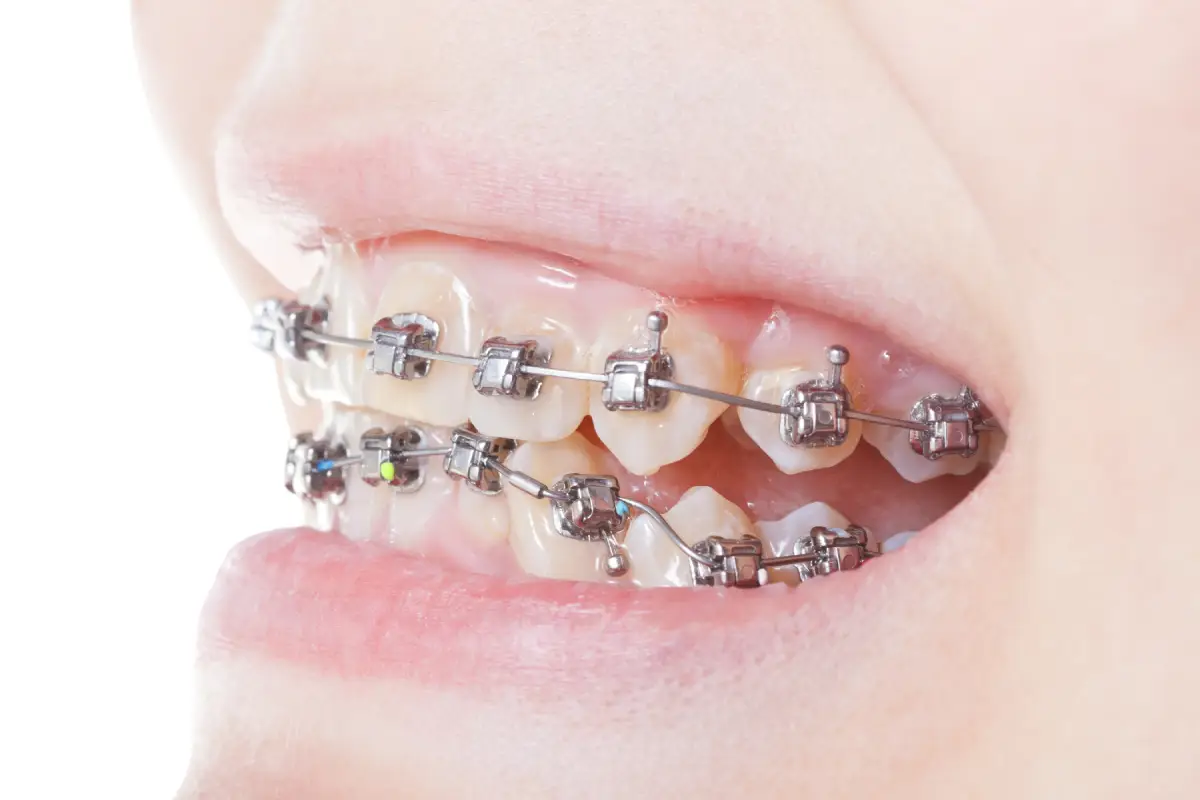
Brackets and Archwires (Braces)

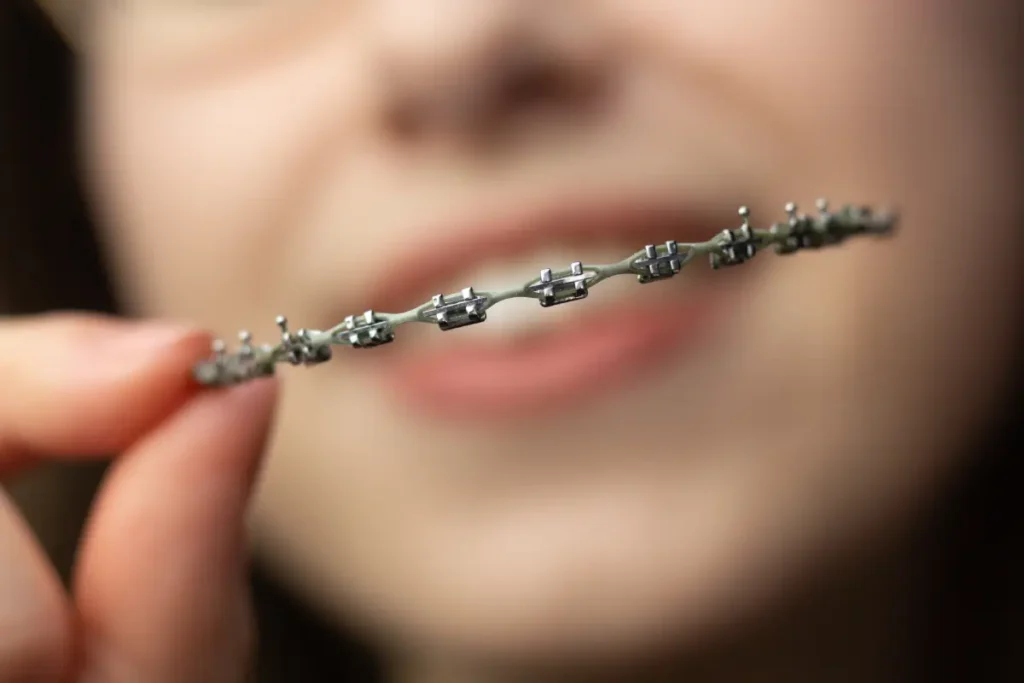
A young lady holding her brackets and wire in front of her mouth, a kind of appliance for orthodontics in Singapore

Traditional braces consist of two main components: brackets and archwires.

Brackets are small metal or ceramic components bonded directly to the front surfaces of your teeth, acting as anchors.

The archwire is a flexible metal wire that runs through the slots of each bracket across the entire arch.

The archwire possesses shape memory, meaning it naturally wants to return to its original, ideal curvature. As it flexes to fit into your misaligned brackets, it exerts a constant pull that guides your teeth into a uniform alignment.

This tool helps correct crowding and realign poorly positioned teeth.

Clear Aligners

Clear aligners are a removable alternative to traditional braces, utilising a series of custom-made plastic trays to straighten teeth. Clear aligners, such as Invisalign, may be used in selected cases.

Unlike braces, aligners do not rely on brackets or wires; instead, they are made from a smooth polyurethane resin. They fit onto the teeth, moving them into the position the aligner tray shifts them to.

Services like Invisalign will provide multiple trays, with each tray moving the patient closer to their ideal smile. Each tray in the series is uniquely shaped to be different from the last, applying sequential pressure to specific teeth.

Elastics and Other Bite-Correction Aids

In addition to braces, your orthodontist may use other tools as well to get your jaw to move into the desired position.

  • Intermaxillary Elastics: Rubber bands that you hook between particular points on your upper and lower braces. These bands modify the connection between your upper and lower jaws. By stretching from the top arch to the bottom arch, these elastics pull to shift your bite configuration.
  • Herbst Appliance: The Herbst appliance is a fixed device used primarily to address severe Class 2 overbites in growing patients. This appliance holds your lower jaw forward. It prevents you from pulling your lower jaw backwards—training your facial muscles and encouraging the lower jaw bone to adapt to a forward position.
  • Palatal Expander: An appliance designed to correct a narrow upper jaw and resolve posterior crossbites. It sits against the roof of your mouth and anchors securely to your upper back teeth. The device features a central screw mechanism that is activated incrementally using a small key. Turning the screw applies a lateral force that separates the two halves of your upper jawbone.

Temporary Anchorage Devices

Temporary Anchorage Devices, commonly known as TADs, are miniature titanium screws placed directly into your jawbone. They act as fixed, immovable anchor points within your mouth.

In traditional orthodontics, anchoring to one tooth can inadvertently cause neighbouring teeth to shift out of place. By utilising a TAD, your orthodontist can apply force against a completely stable base in the bone rather than against a tooth. This allows them to achieve various tooth movements, such as intruding an over-extruded molar or pulling front teeth backwards, without causing unwanted movement in neighbouring teeth.

Retainers

Retainers are orthodontic appliances designed to stabilise and maintain the position of your teeth after orthodontic treatment is complete.

While braces and aligners work to actively move teeth into alignment, a retainer holds them there.

Teeth will shift back toward their original, misaligned positions once braces or aligners are removed.

The surrounding bone and periodontal ligaments require time to remodel and solidify around the new arrangement. So, while this solidification occurs, retainers hold your teeth in place so the jawbone can solidify into your new bite position.

This tool helps protect your investment by maintaining the corrected position of the teeth after treatment.

When to Consider an Orthodontic Assessment

Most people determine they need braces with a simple look in the mirror. They aren’t satisfied with their smile, so they decide to get braces. This is a valid assessment.

However, deciding whether you need braces also means observing your mouth’s daily comfort. 

Consider scheduling an orthodontic assessment if you experience any of the following indicators:

  • Visible Spatial Issues: This includes teeth that are visibly crowded, overlapping, severely rotated, or spaced too far apart. This is the most immediate and obvious sign that people notice—simply not being satisfied with how their smile looks.
  • Jaw Discomfort or TMJ Symptoms: If you frequently experience clicking, popping, or grating sounds when opening your mouth, or if your jaw muscles feel fatigued and sore after eating or waking up, your bite’s alignment might be one of the causes.
  • Difficulty Maintaining Oral Hygiene: If your teeth are crowded to the point where dental floss consistently shreds, snaps, or cannot physically pass between teeth, plaque will accumulate.

An orthodontic assessment provides a comprehensive diagnostic overview using X-rays and 3D modelling. This evaluation allows a professional to identify inefficiencies in your oral anatomy and map out a targeted treatment pathway specifically for you.

Address Crowding, Overbite, and TMJ Through Orthodontics in Singapore

Bite misalignments can lead to a range of complications, including jaw muscle fatigue, tooth wear, and localised discomfort.

Orthodontic care goes beyond improving the appearance of your front teeth; it addresses the underlying mechanics of your mouth’s daily function.

If jaw pain, an uneven bite, or crowded teeth are affecting your daily comfort, an orthodontic assessment can pinpoint the cause and how to fix it. Book a consultation with Elements Dental to explore treatment options tailored to your bite and jaw concerns. Our dental practice is conveniently located in Bukit Timah.

Blog Dental

What to Expect Before, During, and After a Dental Extraction

If you are preparing for a dental extraction in Singapore, it is normal to feel unsure about what will happen next. Many patients want to understand what happens during dental extraction, how to prepare for it, and what to expect after tooth extraction, especially regarding recovery and discomfort.

In this guide, we’ll outline the typical experience, including preparation, the procedure itself, and recovery. Individual experiences may vary depending on the condition of the tooth and overall oral health, so a proper dental assessment is important. 

Key Takeaways

  • A dental extraction procedure in Singapore is commonly performed under local anaesthesia, and patients may feel pressure but not sharp pain during removal.
  • Preparing in advance with rest, soft foods, and proper planning may help make the dental extraction recovery period more manageable.
  • The dental extraction recovery timeline can vary depending on whether the extraction is simple or surgical.
  • Protecting the blood clot after extraction is important, as it helps reduce the risk of complications such as dry socket.
  • Following your dentist’s aftercare advice may support healing and reduce the likelihood of complications.

What Happens During a Dental Extraction

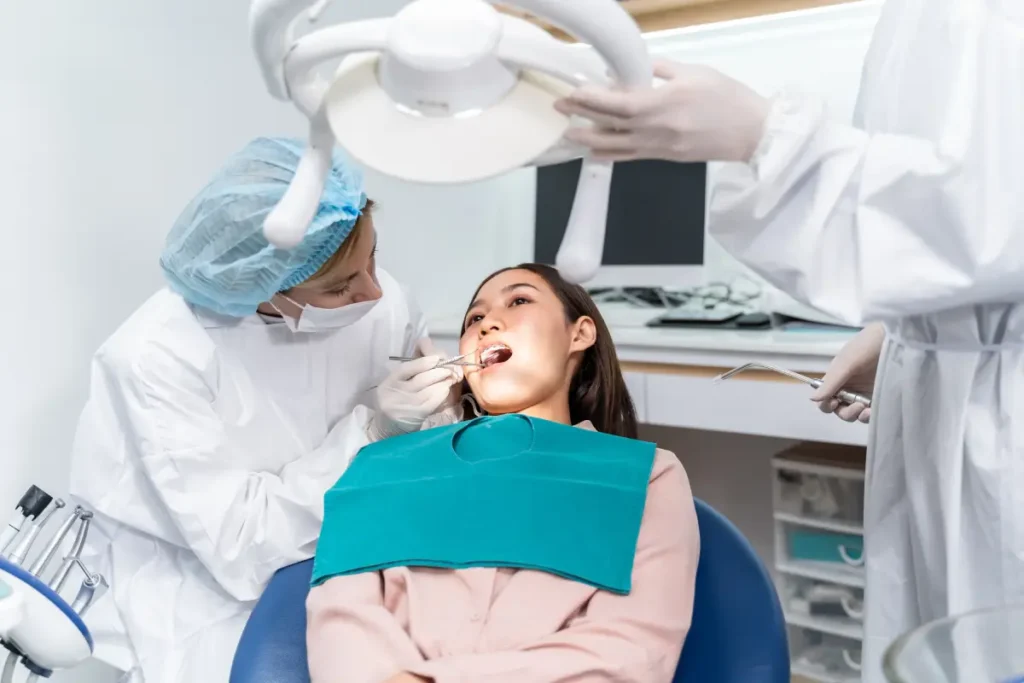
Dentist performing a dental extraction procedure on a patient, showing what to expect during tooth extraction in Singapore

A tooth extraction is generally a straightforward procedure, though the exact steps depend on the tooth’s position and condition.

Many patients report feeling movement or pressure during the procedure, rather than sharp pain. The approach used will depend on your dentist’s clinical assessment.

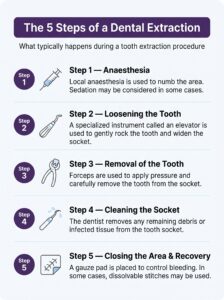
Infographic showing the five typical steps of a dental extraction: anaesthesia, accessing the tooth, removing the tooth, cleaning and closure, and controlling bleeding.

If the extraction is simple, the steps may be quicker and involve less tissue manipulation. Surgical extractions may involve additional steps, such as a small incision or tooth sectioning. Your dentist will explain the plan that applies to your case.

Simple vs Surgical Extraction: What It Means for Your Recovery

Not all dental extractions are the same. The type of procedure can influence what you may experience during recovery.

Simple Extraction

A simple extraction is usually performed when the tooth is visible above the gum.

  • No incision is required
  • The procedure is generally shorter
  • Recovery may be relatively quicker

Some patients can resume light activities within a few days, depending on their comfort and the dentist’s advice.

Surgical Extraction

A surgical extraction may be required when the tooth is not easily accessible, such as in the case of an impacted tooth.

  • A small incision may be made in the gum
  • The tooth may be divided into smaller sections
  • Stitches may be used

Because more tissue is involved, swelling and discomfort may be more noticeable.

Simple vs Surgical Extraction Recovery: What Feels Different

While both procedures aim to remove the tooth safely, the recovery experience may differ.

Aspect Simple Extraction Surgical Extraction
Pain level Usually mild May be mild to moderate
Swelling Minimal May be more noticeable
Eating May resume sooner Soft diet may be needed longer
Downtime Often shorter May require more rest
Healing Generally straightforward May require closer monitoring

Recovery varies between individuals, and your dentist will provide guidance based on your specific case.

How to Prepare for Dental Extraction

Preparation can influence how comfortable the recovery process feels.

Preparing for a Simple Dental Extraction

  • Plan a lighter schedule for the day
  • Prepare soft foods in advance
  • Avoid physically demanding activities immediately after

These steps may help you rest and recover more comfortably.

Preparing for a Surgical Dental Extraction

Surgical extractions may require more preparation.

  • Plan Your Recovery Time: Setting aside time to rest may help reduce strain during the initial recovery period.
  • Prepare Your Diet in Advance: Soft and easy-to-eat foods such as porridge, yoghurt, and soup are commonly recommended.
  • Follow Clinical Instructions Carefully: If sedation is planned, your dentist may provide fasting instructions. These should be followed closely to reduce potential risks.

Dental Extraction Recovery Timeline: What to Expect Each Day

The dental extraction recovery timeline can vary, but many patients experience the following general pattern.

First 24 Hours

  • Blood clot forms at the extraction site
  • Mild bleeding may occur
  • Rest is recommended

Days 2 to 3

  • Swelling may become more noticeable
  • Discomfort may persist
  • Soft foods are usually preferred

Days 4 to 7

  • Swelling may begin to reduce
  • Discomfort often improves
  • Eating may become easier

After One Week

  • Many daily activities can be resumed
  • Healing continues over time

Recovery time varies depending on the complexity of the extraction and individual health factors.

Post-Extraction Care: What You Should Do for Proper Healing

After a tooth extraction in Singapore, care is focused on protecting the extraction site and supporting healing.

What to Avoid After Tooth Extraction

Man smoking outdoors, illustrating what to avoid after a dental extraction to support healing

  • Smoking or vaping
  • Using a straw
  • Vigorous rinsing or spitting
  • Touching the extraction site

These actions may disrupt the blood clot and increase the risk of complications.

What to Eat After a Dental Extraction

Diet is an important part of recovery.

Commonly recommended foods include:

  • Porridge or congee
  • Yoghurt
  • Scrambled eggs
  • Mashed vegetables
  • Lukewarm soups

Foods often avoided during early recovery include:

  • Hard or crunchy foods
  • Spicy or acidic foods
  • Very hot drinks
  • Foods with small particles

Your dentist may provide more specific dietary advice based on your condition.

Pain, Dry Socket, and What Is Normal After Extraction

Some discomfort after a dental extraction is expected, but symptoms can vary.

Normal Post-Extraction Pain

Mild to moderate soreness may occur after the anaesthesia wears off.

What Is Dry Socket

Dry socket can occur if the blood clot at the extraction site is lost too early.

Symptoms That May Require Attention

  • Increasing or severe pain
  • Unpleasant taste or odour
  • Pain spreading beyond the extraction site

If you experience these symptoms, it is advisable to contact your dental clinic.

Common Recovery Mistakes That May Delay Healing

Certain behaviours may affect healing after a dental extraction.

  • Returning to strenuous activity too early
  • Eating hard or unsuitable foods
  • Smoking during the healing period
  • Not following aftercare advice

Avoiding these may help reduce the risk of complications.

When to Contact a Dental Clinic in Singapore

While many recoveries are uneventful, some symptoms should be reviewed by a dentist.

  • Persistent bleeding
  • Increasing swelling or pain
  • Fever or signs of infection
  • Difficulty opening the mouth

Early assessment may help prevent further complications.

Unsure If You Need a Dental Extraction in Singapore

If you are unsure whether your tooth can still be saved with treatments such as a filling, crown, or root canal, it is advisable to seek a professional evaluation.

A dental assessment allows your dentist to recommend options based on your individual condition.

Dental Extraction Aftercare and Recovery Support in Singapore

Recovering from a dental extraction procedure in Singapore involves understanding what to expect and following appropriate aftercare guidance. Each patient’s experience may differ, depending on the type of extraction and overall oral health.

At Elements Dental, we support patients by explaining treatment options, outlining what to expect after tooth extraction, and providing guidance tailored to individual needs. If you are considering a dental extraction or would like to better understand your condition, you may arrange a consultation for a clinical assessment and personalised advice.

Frequently Asked Questions

Can I brush my teeth on the day of extraction

You may brush your teeth, but it is generally advised to avoid the extraction site initially and follow your dentist’s guidance.

Is it normal to feel tired after a dental extraction

Some patients may feel tired after the procedure, particularly if sedation is used or if the procedure was complex.

Can I drink cold beverages after extraction

Cold beverages are usually acceptable, but using a straw is often discouraged during early recovery.

Will stitches need to be removed after extraction

Some stitches dissolve on their own, while others may require removal depending on the material used.

How soon can I return to exercise after extraction

Light activity may be resumed depending on comfort, but strenuous exercise is often delayed based on your dentist’s advice.

Note: This article is intended for general educational purposes and is not a substitute for professional dental advice. A clinical assessment is needed before any treatment decision is made.