
AI Summary
A dental prosthesis, whether a crown, bridge, denture or implant restoration, needs a mouth that’s structurally ready before it’s fitted. This guide covers the five checkpoints a dentist reviews during a dental check up, including gum health, tooth strength, bone volume, bite alignment and medical history, along with what the consultation involves and how the results shape which prosthesis suits your case.
Before a crown, bridge, or denture is fitted, your dentist needs to confirm your gums, bone, and bite can support it. A dental check up is where that gets decided, not the treatment itself. At Elements Dental, this readiness check is where every prosthesis case starts.
Key Takeaways
- A dental prosthesis (crown, bridge, denture or implant restoration) needs a mouth that’s structurally ready, not just a gap to fill.
- Your dentist checks five areas before treatment: gum health, remaining tooth strength, bone volume, bite alignment and your general medical history.
- Skipping this check up raises the risk of infection, a poor fit or early prosthesis failure.
- The type of prosthesis you’re offered often comes directly from what this check up finds.
What Is a Dental Prosthesis, and Why the Check Up Comes First
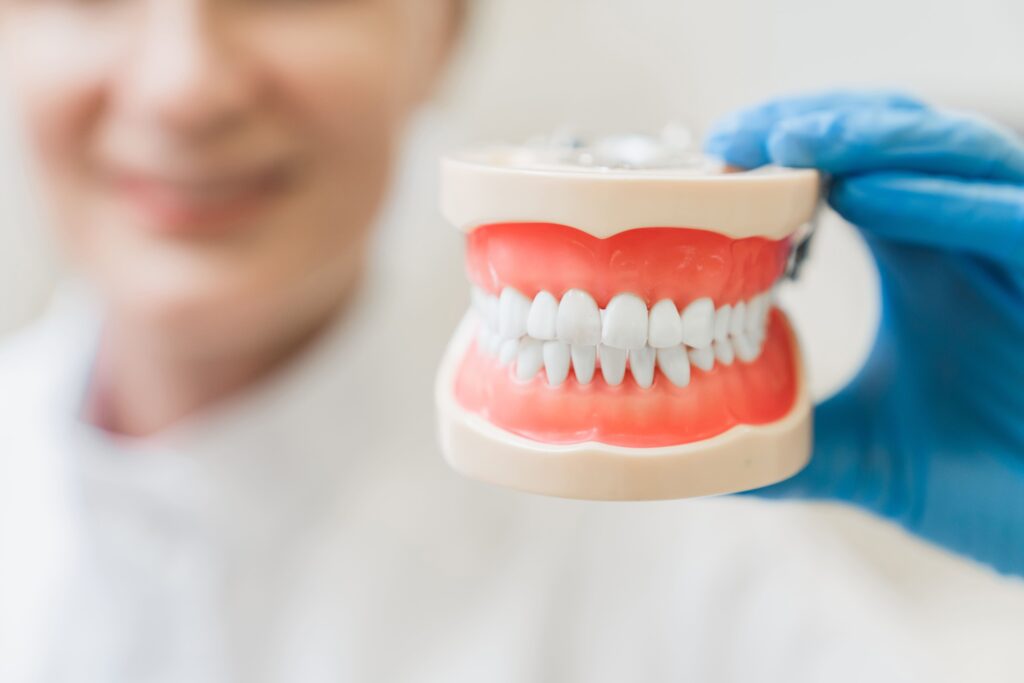
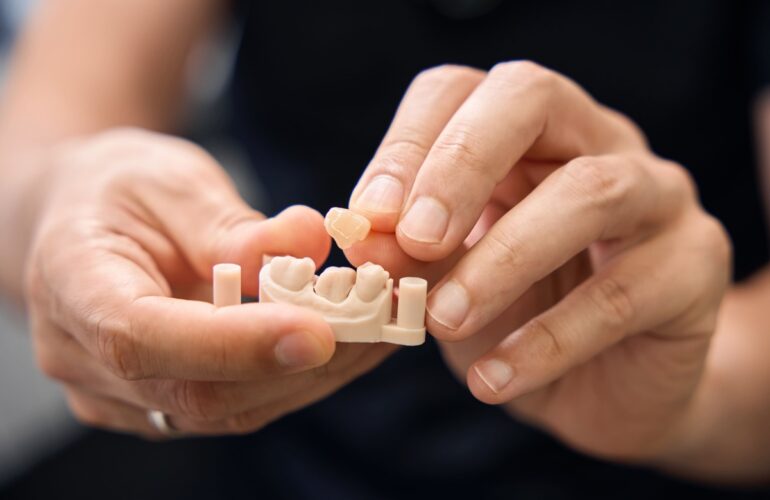
A dental prosthesis replaces or covers a damaged or missing tooth. The main types are:
- crowns (covering a single weakened tooth)
- bridges (replacing one or more missing teeth using neighbouring teeth for support
- removable dentures
- implant-supported restorations.
Each type places different demands on the mouth, so the check up before it varies too.
Fitting a prosthesis without this check up carries real risk. Untreated gum disease can undermine a new crown. Insufficient bone can cause an implant to fail. An unassessed bite can lead to a bridge fracturing under uneven pressure.
The check up exists to catch these issues before they become expensive problems.
The Five Checkpoints Your Dentist Reviews
| Checkpoint | What’s assessed | Why it matters |
| Gum health | Bleeding, pocket depth, inflammation, recession | Unhealthy gums undermine the foundation of any prosthesis |
| Tooth strength | Cracks, decay, structure of supporting teeth | A weak abutment tooth may need root canal treatment first |
| Bone volume | Jawbone density via X-ray or CBCT scan | Implants need enough bone to integrate securely |
| Bite alignment | How upper and lower teeth meet, signs of grinding | A poor bite can damage or dislodge a new prosthesis |
| Medical history | Medications, chronic conditions, lifestyle | Conditions like diabetes affect healing and prosthesis success |
If a checkpoint doesn’t clear, your dentist will usually recommend addressing it first, such as scaling and root planing for gum disease, a root canal for a compromised tooth, or bone grafting where volume is low.
What Happens During the Consultation
A check up before a dental prosthesis usually follows the same sequence, though the details can vary by case.
- Medical and dental history review. Your dentist reviews your health history, current medications, and any past dental treatment.
- Visual examination. Your teeth, gums and soft tissues are checked for signs that could affect the prosthesis.
- Digital X-rays or a CBCT scan. These are taken where needed to assess bone and structures not visible to the eye.
- Gum probing. Pocket depth is measured to check for gum disease that might need treatment first.
- Digital intraoral scanning. Some clinics use this to record the mouth without physical impressions, which can support more accurate prosthesis planning.
The consultation itself usually takes 30 to 60 minutes, and CHAS subsidies may apply to eligible patients for selected procedures, subject to clinical assessment.
Choosing the Right Prosthesis for Your Situation
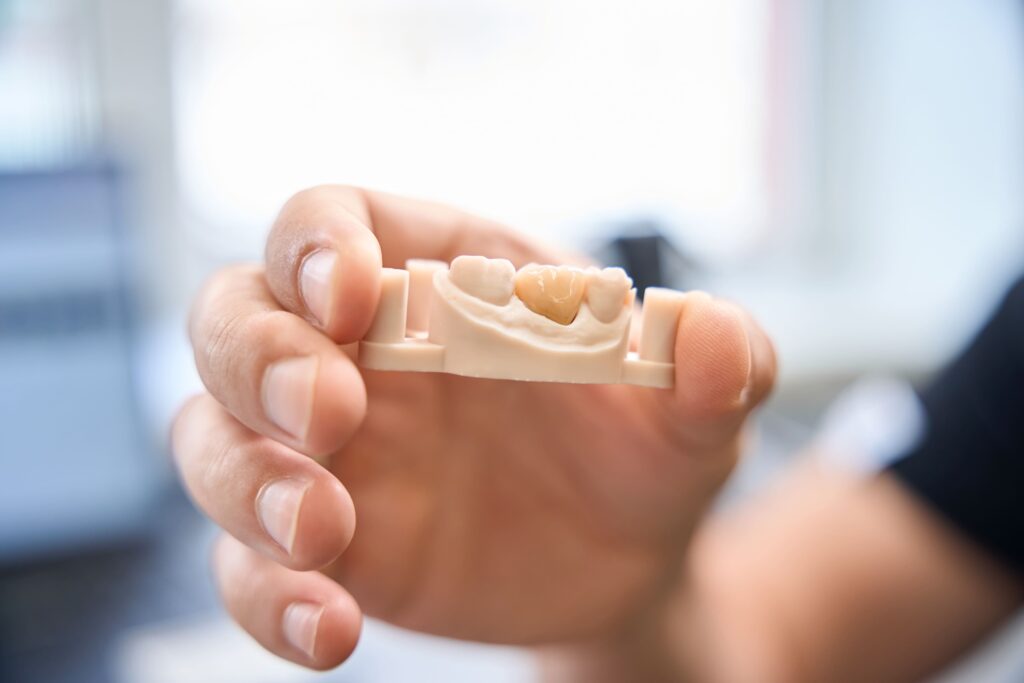
Your check up results guide which prosthesis makes sense for your case.
| Your situation | Prosthesis often considered |
| A single weakened tooth with healthy surrounding structure | Crown |
| One or more missing teeth with strong neighbouring teeth | Bridge |
| Multiple missing teeth, or a preference for a removable option | Denture |
| Adequate bone volume and healthy gums | Implant-supported restoration |
Material choice, such as zirconia, porcelain, metal alloy or acrylic resin, then depends on the location of the tooth, your bite forces and the durability needed.
Risks of Waiting Too Long
Delaying replacement of a missing or damaged tooth allows neighbouring teeth to shift into the gap and the opposing tooth to over-erupt. This changes the bite over time and can make the eventual prosthesis more complicated to fit.
If you’re waiting for treatment, keep the area clean, avoid chewing directly on it, and contact your dentist promptly if you notice swelling, persistent pain, bleeding, or a sharp broken edge, as these are signs that waiting is no longer appropriate.
Preparing for Your First Appointment
Bring a list of your current medications and any chronic conditions, along with previous dental X-rays if you have them. It can help to write down your questions beforehand, such as how many appointments the process will take, what the full cost involves, and how long the finished prosthesis is expected to last with proper care.
Dental Check Up Before a Dental Prosthesis: What to Remember
A dental prosthesis has a better chance of lasting when you check the groundwork first. Gum health, tooth strength, bone volume, bite alignment and your medical history all factor into whether you’re ready, and what type of prosthesis suits your case.
At Elements Dental, this check up is where we start with every patient considering a crown, bridge, denture or implant, so nothing gets fitted before the mouth underneath it is ready. If you’d like us to assess your readiness, you can book a consultation at our Bukit Timah clinic to go through it in person.
Frequently Asked Questions
How much does a dental check up before a prosthesis cost in Singapore?
Consultation fees vary by clinic and by the imaging or diagnostics involved. CHAS-eligible patients may receive subsidies for selected procedures, subject to assessment.
Can I get a dental prosthesis on the same day as my check up?
Most prostheses require multiple appointments for planning, fabrication and fitting. Some clinics use CAD/CAM systems that can produce certain restorations more quickly, though this depends on the individual case.
Is a check up still necessary if I already know which tooth needs a crown?
Yes. The health of the surrounding gums, bone and bite affects how well that crown will function, so this needs to be confirmed regardless of how clear the diagnosis seems.
How long does a dental prosthesis last after fitting?
Lifespan varies by prosthesis type and how well it’s cared for at home, alongside regular dental visits. Your dentist can give you a more specific estimate based on your case.
What signs suggest I might need a root canal before a crown?
Persistent pain, temperature sensitivity, and X-ray findings showing changes near the tooth’s root can indicate nerve involvement, which your dentist would address before placing a crown.